

Ayurveda calls the eyes the foremost of all sense organs: “Nayanam sarvendriyanam pradhanam.” Ayurveda ophthalmology is the branch that studies the healthy eye, the diseased eye and the ways to restore balance. At Om Ayurveda Eye Care Centre in Gurugram, this classical science meets modern diagnostic checks, so you get the depth of tradition and the clarity of examination together.
What Is Shalakya Tantra?
Ayurveda has eight classical branches (Ashtanga Ayurveda): general medicine (Kayachikitsa), surgery (Shalya Tantra), diseases above the neck (Shalakya Tantra), paediatrics (Kaumarabhritya), toxicology (Agada Tantra), psychiatry (Bhuta Vidya), rejuvenation (Rasayana) and fertility science (Vajikarana).
Shalakya Tantra deals with diseases of the organs above the neck: the eyes, ears, nose, throat and head. The name comes from shalaka, the slender probe used in its procedures. The eye-focused part of this branch is what we call Ayurveda ophthalmology. For a simple explainer, read what is Shalakya Tantra.
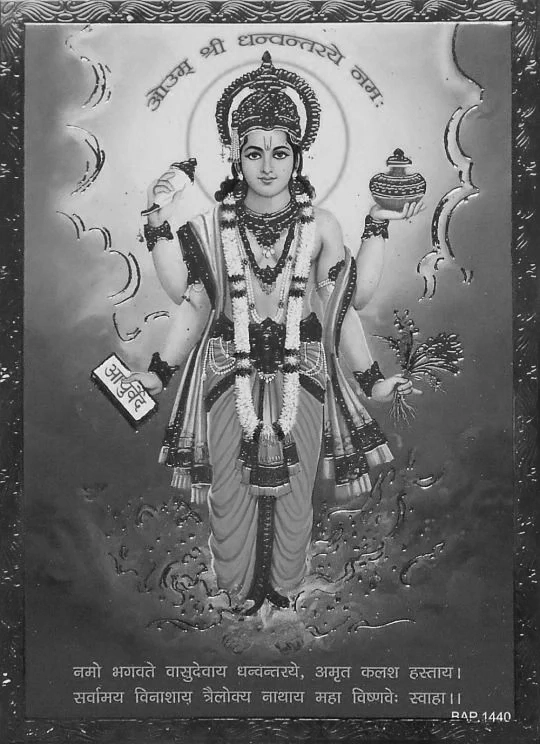
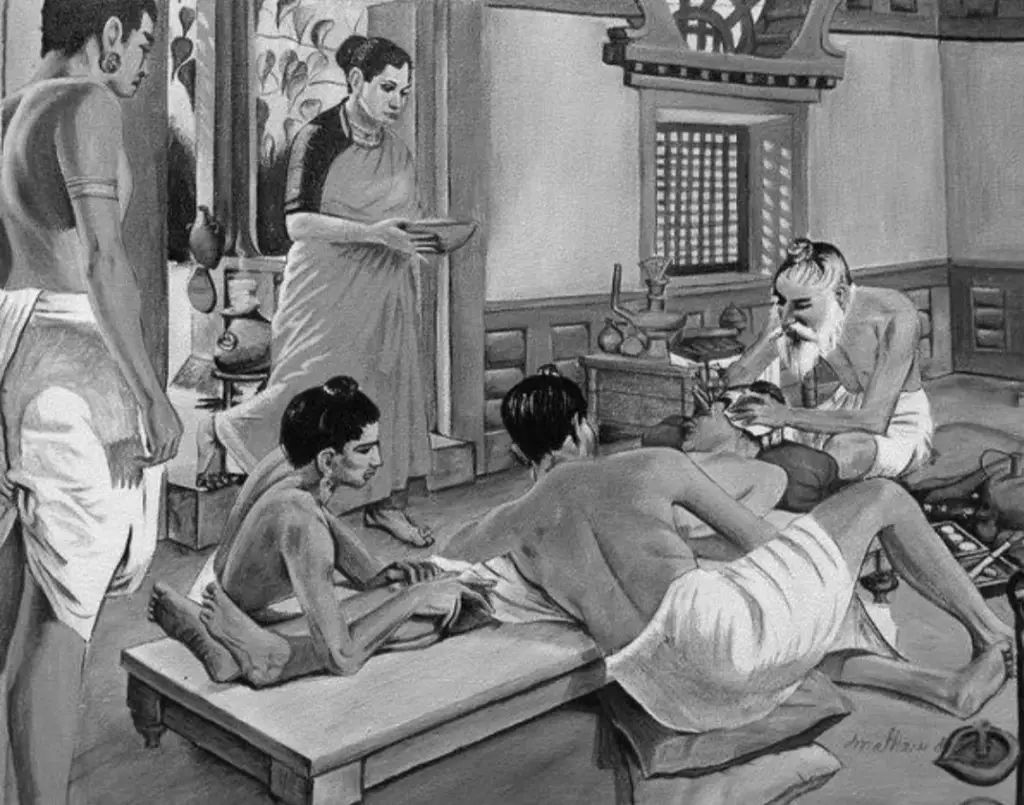
Sushruta: The Father of Ayurvedic Ophthalmology
The ancient surgeon-physician Sushruta described eye anatomy, the classification of eye diseases and many treatment procedures in the Sushruta Samhita. The classical texts describe dozens of eye diseases, 76 by the traditional count, grouped by the part of the eye affected and the dosha involved. Our approach builds on this foundation and applies it to the problems patients bring today, from screen-related strain to chronic retinal conditions.
How Ayurveda Understands the Eye
Ayurveda divides the eye into layers and regions, such as the eyelashes and lid margins, the eyelids, the white part, the black part and the pupil with its vision. Each region is linked to certain tissues and doshas.
Three ideas matter most in practice:
- Alochaka Pitta is the subtype of Pitta that governs visual perception. Heat, strain and inflammation disturb it, which is why redness, burning and light sensitivity are so common.
- Tarpaka Kapha is the subtype of Kapha that nourishes and lubricates the sense organs. When it is depleted, eyes feel dry and tired.
- Vata controls movement and nerve function. Imbalance shows up as dryness, twitching, pain and degeneration.
Good vision depends on these three working in balance, along with healthy digestion and sleep.
What Causes Eye Diseases According to Ayurveda?
Ayurveda names three root causes: wrong use of the senses, errors of judgement and seasonal imbalance.
- Wrong use of the eyes (Asatmyendriyartha samyoga)
- Ayoga: too little use of the eyes, such as working in dim light for long periods
- Atiyoga: overuse, such as continuous reading, bright screens, sunlight or welding light
- Mithyayoga: unnatural use, such as reading from too far or too close
- Looking at disturbing sights, or strong emotional states such as fear or hatred while looking at things
- Pragyaparadha (knowingly harming yourself) Eating junk or preservative-heavy food, poor sleep, suppressing natural urges and ignoring early warning signs.
- Ritu viparyaya (seasonal effects) Infectious eye problems rise in the rainy season, while inflammatory problems rise in winter and spring.
Modern life amplifies these causes. See how screens affect you in computer vision syndrome and how stress affects your eyesight.
How Diagnosis Works
Ayurvedic examination combines observation, touch and detailed questioning, along with modern checks:
- History: symptoms, screen hours, sleep, diet, bowel habits, stress and past illness
- Observation: appearance of the eyes and eyelids, tears, redness, discharge
- Constitution (Prakriti) and current imbalance (Vikriti): to decide which dosha needs correcting
- Modern screening: vision testing, refraction and diagnostic checks in our Eye OPD
How Treatment Is Planned
Ayurvedic treatment follows four broad principles:
- Nidana parivarjana: remove the cause. This means correcting screen habits, sleep, diet and stress.
- Shodhana: cleansing therapies for deeper imbalance, such as selected Panchakarma procedures. Read Panchakarma for eye disorders.
- Shamana: internal herbal medicines that pacify the disturbed dosha.
- Kriyakalpa: the classical local eye procedures, and Rasayana, the rejuvenating care that nourishes tissue over time.
Diet and daily routine (pathya and apathya) run through everything, because the best therapy cannot work against a lifestyle that keeps disturbing the eyes.
Kriyakalpa: The Classical Eye Procedures
Shalakya Tantra describes seven local eye procedures:
- Tarpana: medicated ghee retained over the eyes. See Netra Tarpanam
- Putapaka: a herbal extract prepared in a special way and used on the eyes
- Seka: a gentle stream of medicated liquid. See Akshi Sekam
- Ashchyotana: medicated eye drops
- Anjana: medicated collyrium. See Anjanam
- Pindi: herbal pack over closed eyes. See Netra Pindi
- Bidalaka: herbal paste on the outer eyelids
We also use head and nervous system therapies such as Shirodhara and Pratimarsha Nasyam. See all of them on our Eye Treatment page. To compare the two best-known procedures, read Netra Basti vs Netra Tarpanam.
Conditions Ayurveda Ophthalmology Addresses
Our specialists see conditions such as glaucoma, diabetic retinopathy, retinal degenerations, uveitis, corneal diseases, optic neuropathies, cataract and dry eye disease. See every condition on our Eye Diseases page.
Some of these can lead to progressive vision loss. That is why early examination matters, and why we work with your ophthalmologist for serious cases.
Ayurveda Ophthalmology and Modern Ophthalmology: Working Together
Ayurveda Ophthalmology vs. Modern Ophthalmology
|
Ayurveda Ophthalmology |
Modern Ophthalmology |
|---|---|
|
Focuses on dosha balance, lifestyle, and traditional approaches to eye health. |
Focuses on diagnosis using clinical examinations and instruments, targeted medications, and surgery. |
|
May provide supportive care for chronic symptoms, eye strain, dryness, and preventive eye wellness. |
Manages eye emergencies and conditions requiring surgery, injections, laser treatment, or glasses. |
|
Cannot reshape structural refractive errors or replace surgery for mature cataracts. |
Can correct refractive errors and provide surgical treatment for cataracts and other eye conditions. |
|
May complement conventional care through appropriate lifestyle guidance and supportive therapies. |
Provides evidence-based diagnosis and treatments to prevent vision loss and manage eye diseases. |
The best outcomes often come from coordination. We encourage you to keep your ophthalmologist informed, and we will tell you honestly when a condition needs their care first. Read Ayurvedic vs allopathic treatment for dry eye for an example.
Who Should Consult an Ayurvedic Eye Specialist?
- People with recurring dryness, redness or strain
- Those who depend on eye drops again and again
- Patients with chronic conditions who want supportive care
- Screen users and IT professionals
- Parents of children with eye strain, squint or lazy eye
- Adults over 40 who want to protect their vision
- Anyone who wants a second opinion on a long-standing eye problem
Our Team
Start With an Eye Check-Up
Begin with an Eye OPD consultation. If you need extended care, we offer Eye IPD. Protect your eyes early with preventive ophthalmology.
Frequently Asked Questions
Q1. What is Ayurveda ophthalmology?
Answer: Ayurvedic ophthalmology is the traditional Ayurvedic approach to eye health and eye diseases. It is part of Shalakya Tantra, a branch of Ayurveda that focuses on conditions affecting the eyes, ears, nose, throat, and head.
Q2. Who is the father of Ayurvedic ophthalmology?
Answer: Acharya Sushruta is widely regarded as a foundational figure in Ayurvedic surgery. His classical text, the Sushruta Samhita, describes various eye diseases and traditional procedures.
Q3. How many eye diseases are described in Ayurveda?
Answer: According to traditional Ayurvedic classifications, classical texts describe 76 types of eye diseases.
Q4. Is Ayurvedic eye treatment safe?
Answer: Safety depends on the treatment, ingredients, and the practitioner’s qualifications. Consult a qualified specialist and inform your ophthalmologist about any Ayurvedic medicines or procedures you are considering. Read our guide on how to choose an Ayurvedic eye clinic.
Q5. Is an Ayurvedic eye specialist the same as an ophthalmologist?
Answer: No. An Ayurvedic eye specialist practises Shalakya Tantra, while a modern ophthalmologist is trained in medical and surgical eye care. Coordinated care is especially important for serious eye conditions.
Q6. Can Ayurveda improve eyesight without glasses?
Answer: Ayurvedic approaches may support general eye wellness, but there is no reliable evidence that they can permanently correct refractive errors such as myopia, hyperopia, or astigmatism. Glasses, contact lenses, or appropriate refractive procedures may still be needed. Read more about improving eyesight naturally without glasses.
Q7. What is Alochaka Pitta?
Answer: In Ayurvedic theory, Alochaka Pitta is a subtype of Pitta dosha associated with visual perception and the functioning of sight.
Q8. What is Kriyakalpa in Ayurveda?
Answer: Kriyakalpa refers to traditional local Ayurvedic therapies used for eye care. Procedures include Tarpana, Seka, Anjana, and Pindi, among others. Their suitability and safety should be assessed by a qualified practitioner.
Q9. Do you use modern eye tests?
Answer: Yes. OM Ayurveda Eye Care provides vision testing, refraction, and diagnostic screening through its OPD to help assess eye health and determine appropriate care.
Q10. How long does Ayurvedic eye treatment take?
Answer: Treatment duration depends on the condition, its severity, and the individual care plan. Some symptoms may improve sooner, while chronic conditions may require ongoing monitoring and management.
Q11. Can children receive Ayurvedic eye care?
Answer: Yes. Children can be assessed for age-appropriate eye care. Ayurvedic approaches should complement, not replace, standard vision correction and necessary treatment from a qualified eye specialist.
Q12. Where is your Ayurvedic eye hospital in Gurgaon?
Answer: OM Ayurveda Eye Care is located at 1093, Sector 40, near Unitech Cyber Park, Gurugram, Haryana. Contact the clinic to confirm appointment availability and consultation timings.