
Blurred vision, dry and tired eyes, redness, itching, headaches after screen time, or a vision problem optic nerve problems retinal problems etc, that keeps getting worse? The Eye OPD at Om Ayurveda Eye Care Centre is where your treatment starts. You get an eye check-up, a clear diagnosis and a personalised Ayurvedic plan on the same day, with no overnight stay.
Address: 1093, Sector 40, near Unitech Cyber Park, near the metro station, Gurugram, Haryana Phone: +91 8377000737 | Email: info@omayurvedaeye.com
What Is an Eye OPD?
OPD stands for Outpatient Department. You meet an eye specialist, get examined, receive a treatment plan and go home the same day. Nothing needs admission. Many patients are advised short therapy sessions on separate days, and a few who need longer supervised care are admitted to our Eye IPD.
Think of the OPD as your starting point. It answers three questions: what exactly is wrong, how serious is it, and what is the right next step for you.
What Happens During Your Eye OPD Visit
- Registration: a quick check-in at the front desk, where your details and main complaint are noted.
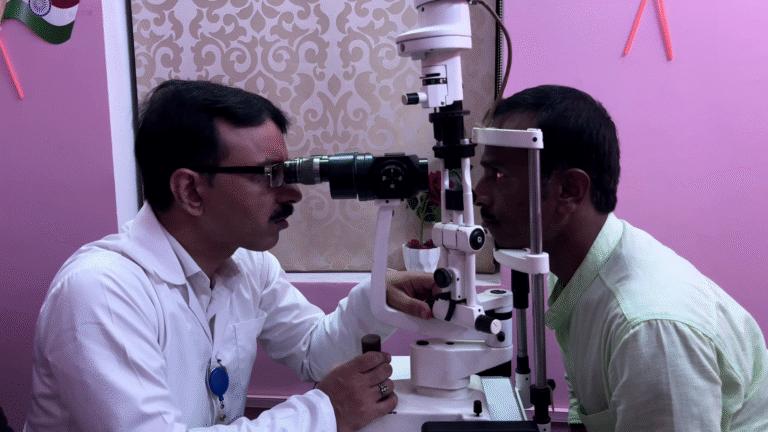
- Basic eye tests: vision testing, refraction analysis and essential diagnostic screening. These show how well you see and whether you need glasses or a change in power.
- Specialist consultation: an Ayurvedic eye specialist reviews your test results, symptoms, daily routine, screen hours, sleep, diet, past illnesses and medicines.
- Ayurvedic assessment: your constitution (Prakriti) and the dosha imbalance behind the problem are assessed. This is what makes the plan personal.
- Treatment plan: you are told clearly what is causing the problem, what treatment is advised, how many sessions you may need and what to expect.
- Follow-up guidance: home care, diet, eye exercises and review dates, so you leave with a plan and not just a prescription.
Most first visits are completed in a single sitting. Please keep some extra time in hand, because a proper consultation should never feel rushed.
What to Bring to Your First Visit
- Previous eye reports, scans and prescriptions
- Your current glasses or contact lenses
- A list of all medicines, including eye drops, and how long you have used them
- Blood sugar and blood pressure reports if you have diabetes or hypertension
- Any previous surgery or discharge papers
- A family member, if the patient is a child or an elderly person
Symptom Guide: What Your Eyes May Be Telling You
This table is only a guide. An eye examination is the only way to identify the actual cause.
What You Notice | Common Possibilities | When to Book an Eye Examination |
|---|---|---|
Gritty, burning or tired eyes | Dry eye, digital eye strain | If symptoms last over 2 weeks or you need eye drops daily |
Blurred distance vision | Myopia, uncorrected prescription | If vision worsens or affects driving |
Difficulty reading small print | Hyperopia, presbyopia (often after 40) | If you need to hold reading material farther away |
Redness, itching or watering | Allergy, infection, dryness | If accompanied by discharge or pain |
Headache after screen work | Eye strain, uncorrected prescription | If it occurs most days |
Night vision trouble or glare | Early cataract, retinal conditions | Book promptly, especially if symptoms are new |
Eyes not aligned or one eye seems weaker | Squint (strabismus), lazy eye (amblyopia) | Arrange an examination as early as possible in children |
Double vision | Eye muscle or nerve problems | Seek prompt medical assessment |
Floaters or flashes | Vitreous changes, retinal conditions | Seek urgent assessment if sudden or numerous |
Read more about dry eye disease, myopia and early signs of cataract.
Why Choose Our OPD Eye Services?
- Ayurvedic eye specialists: our team follows Ayurveda ophthalmology (Shalakya Tantra), the classical branch dedicated to eye disease, alongside modern diagnostic checks.
- Root-cause thinking: instead of only lubricating or masking symptoms, we look at digestion, sleep, stress, screen habits and constitution.
- Complete screening: visual acuity and structural evaluation, so diagnosis rests on examination.
- Personalised treatment: herbal medicines, therapeutic procedures and lifestyle advice. See all Ayurvedic eye treatments.
- Natural, non-invasive care that keeps invasive procedures to a minimum.
- Honest guidance: if your condition needs surgery, we tell you plainly.
Conditions We See in the Eye OPD
Surface and comfort problems
- Dry eye disease. See our page on Ayurvedic dry eye treatment
- Allergic conjunctivitis, redness, itching and watering
- Digital eye strain. Read computer vision syndrome prevention
Vision power problems
- Myopia, hyperopia and astigmatism
Retina, nerve and chronic conditions
- Glaucoma
- Diabetic retinopathy
- Retinal degenerations and retinitis pigmentosa
- Optic neuropathies
- Cataract care and prevention
Cornea and inflammation
Children
Browse the full list on our Eye Diseases page.
Eye OPD for Children
Children rarely say “I cannot see”. They squint, sit close to the TV, tilt their head or avoid reading. A child’s visual system develops in the early years, so early checks matter a lot. In the OPD we keep the visit calm and child-friendly, involve parents in every step and give a home routine that families can actually follow. Read how to protect children’s eyes from screen exposure.
Eye OPD for Outstation Patients
Many patients travel to us from other parts of Haryana, Delhi NCR and other states. To make the trip count:
- Call ahead on +91 8377000737 to confirm your slot and share your main problem.
- Carry all reports so the specialist can decide the plan in one visit.
- Ask about the course: if therapy sessions on consecutive days are advised, plan your stay accordingly, or consider admission through Eye IPD.
- Follow-up: [ADD: mention whether phone or video follow-up is available and how patients can send updates].
The centre is near Unitech Cyber Park and close to the metro station, which makes it easy to reach from across Gurugram and Delhi.
What Happens After the OPD?
Depending on your condition, your specialist may advise one of these pathways:
- Medicines and lifestyle plan only: for mild conditions, with a review visit.
- OPD therapy sessions: short courses of therapies such as Netra Tarpanam or Akshi Sekam on scheduled days.
- Admission for a structured course: through Eye IPD, for chronic or progressive conditions.
- Referral or co-management: when your condition needs surgery or an ophthalmologist’s care, we advise you honestly and support you alongside that treatment.
- Preventive plan: regular screening and care under preventive ophthalmology.
Consultation Fee and Charges
[ADD: consultation fee, or the line “Please call us for current consultation charges”]. Therapy charges depend on the advised procedure and number of sessions, and you will be told clearly before treatment starts so there are no surprises.
Eye OPD Timings
Day | Timing |
|---|---|
Monday | 09:30 AM – 4:00 PM, 5-8 PM |
Tuesday | 09:30 AM – 4:00 PM, 5-8 PM |
Wednesday | 09:30 AM – 4:00 PM, 5-8 PM |
Thursday | 09:30 AM – 4:00 PM, 5-8 PM |
Friday | 09:30 AM – 4:00 PM, 5-8 PM |
Saturday | 09:30 AM – 4:00 PM, 5-8 PM |
Sunday | 9:30 AM – 2 PM |
Please call before visiting to confirm your appointment slot.
Myths and Facts About Ayurvedic Eye Care
Myth: Ayurveda works only as a last resort. Fact: Early care often gives the best results. Waiting until damage is advanced limits what any treatment can do.
Myth: Ayurvedic treatment means you can throw away your glasses. Fact: Structural refractive errors need proper correction. Ayurveda can reduce strain and support eye health. Read can Ayurveda improve eyesight without glasses.
Myth: Natural means no precautions are needed. Fact: Procedures near the eyes need trained hands and clean technique. Never try ghee or herbal therapies at home on your own.
Myth: Eye drops are bad and should be stopped immediately. Fact: Never stop a prescribed medicine without medical advice, especially for glaucoma or after surgery.
Myth: If my eyes do not hurt, they are fine. Fact: Glaucoma and early diabetic eye changes can be painless. Regular check-ups catch what symptoms miss.
Helpful Reading Before Your Visit
When to Seek Emergency Care First
Sudden vision loss, severe eye pain, an eye injury, a chemical splash, or a dark curtain across your vision need urgent care. Please go to the nearest hospital emergency department first. Read sudden eye pain: when to worry.
Frequently Asked Questions
Q1. What is an Ayurvedic Eye OPD?
Answer: An Ayurvedic Eye OPD is a same-day outpatient consultation where an Ayurvedic eye specialist examines your eyes, assesses your condition and plans treatment without hospital admission.
Q2. Is there an eye doctor near Unitech Cyber Park, Gurugram?
Answer: Yes. Om Ayurveda Eye Care Centre is located at 1093, Sector 40, near Unitech Cyber Park and close to the metro station.
Q3. What tests are done in the eye OPD?
Answer: Tests may include vision testing, refraction analysis and essential diagnostic screening, followed by the specialist’s clinical assessment.
Q4. What are the eye OPD timings?
Answer: The OPD is open from 10 AM to 4 PM on Monday, Tuesday, Wednesday, Friday and Saturday. On Thursday, the timings are 10 AM to 1 PM.
Q5. Do I need an appointment for an eye consultation?
Answer: Calling ahead helps confirm your appointment slot and reduce waiting time. Call +91 8377000737 before visiting.
Q6. How long does the first eye consultation take?
Answer: The first visit should allow enough time for eye tests and a detailed discussion with the specialist. Bringing previous reports can help save time.
Q7. Should I bring my previous eye reports?
Answer: Yes. Bring previous eye reports, prescriptions, your current glasses and a list of medicines you use.
Q8. Can I continue my current eye drops during Ayurvedic treatment?
Answer: Do not stop prescribed eye drops or other medicines without medical advice. Your specialist will guide you on which treatments to continue.
Q9. Will I need hospital admission for Ayurvedic eye treatment?
Answer: Most patients can be managed through outpatient consultations. Admission may be recommended for certain chronic or progressive conditions that require structured care.
Q10. Do you treat children with eye problems?
Answer: Yes. Children can be assessed for conditions such as lazy eye, squint and eye strain, alongside standard vision correction when needed.
Q11. Can diabetic patients get eye check-ups at the centre?
Answer: Yes. Diabetic patients benefit from regular eye monitoring and may receive supportive Ayurvedic care alongside their physician’s treatment.
Q12. Is Ayurvedic eye treatment safe?
Answer: Safety depends on the condition, treatment method and practitioner’s qualifications. Consult a trained specialist and avoid unverified eye remedies.
Q13. Can I get an eye check-up before starting treatment?
Answer: Yes. You can have a consultation and understand the recommended treatment plan before deciding whether to proceed.
Q14. Do you offer inpatient eye care?
Answer: Yes. Inpatient care is available for patients who need extended or structured treatment. Learn more about Eye IPD.