


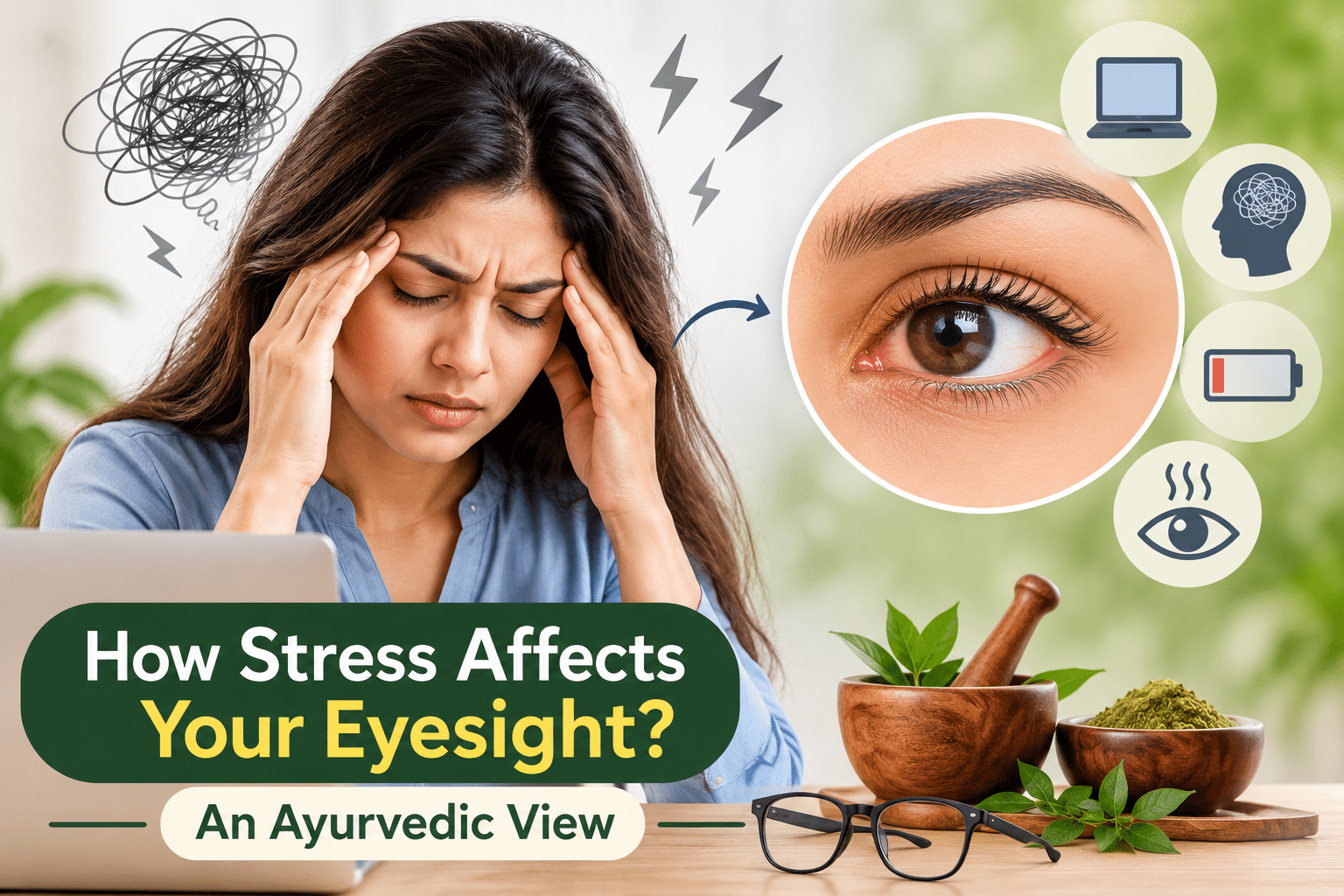
We often think of stress as something that affects our mood, sleep, or digestion, but rarely do we connect it directly to our eyes. Yet chronic stress has a well-documented impact on vision and eye health, something Ayurveda identified centuries before modern research caught up.
How Stress Affects Your Eyes: The Modern Understanding
1. Eye Twitching
Stress is one of the most common triggers for involuntary eyelid twitching (myokymia), caused by heightened nervous system activity affecting the small muscles around the eyes.
2. Dry Eyes
Chronic stress can reduce blink rate and affect tear production, both contributing to dryness, irritation, and a gritty sensation.
3. Blurred Vision
Stress hormones like cortisol can cause temporary changes in visual processing, sometimes leading to brief episodes of blurred or unfocused vision, particularly during acute stress or anxiety.
4. Eye Strain and Tension Headaches
Chronic muscle tension from stress often manifests around the eyes and forehead, contributing to strain-related headaches and a feeling of pressure or fatigue in the eyes.
5. Light Sensitivity
Anxiety and stress can heighten overall sensory sensitivity, including making eyes feel more sensitive to bright light than usual.
6. Worsening of Existing Eye Conditions
Stress can exacerbate conditions like dry eye syndrome, and some research suggests it may play a role in flare-ups of certain inflammatory eye conditions.
The Ayurvedic Perspective
Ayurveda has always emphasized the deep connection between the mind (Manas) and the body, and the eyes are no exception. Chronic stress primarily aggravates Vata dosha, the energy governing the nervous system and movement, which explains why stress-related eye symptoms often include twitching, dryness, and a sense of erratic, unsettled discomfort rather than steady, dull symptoms.
Prolonged stress can also generate excess Pitta, particularly when combined with poor sleep, irregular eating, and overstimulation, contributing to burning sensations, redness, and heightened light sensitivity in the eyes.
Ayurvedic Approaches to Reduce Stress-Related Eye Problems
1. Abhyanga (Self-Oil Massage)
Regular warm oil massage, particularly on the head, temples, and feet, is one of the most effective Vata-pacifying practices in Ayurveda, directly calming the nervous system and reducing stress-related eye symptoms like twitching and strain.
2. Pranayama (Breathing Exercises)
Slow, controlled breathing practices like Anulom Vilom (alternate nostril breathing) and Bhramari (humming breath) help calm the nervous system, reducing overall stress and its downstream effects on the eyes.
3. Consistent Sleep Routine
Since irregular sleep both causes and worsens stress, and directly aggravates Vata, maintaining a consistent sleep schedule is fundamental to breaking the stress-eye symptom cycle.
4. Netra Tarpanam for Stress-Related Dryness
For people experiencing chronic dry eyes or strain linked to prolonged stress, Netra Tarpanam offers deep nourishment that can help restore comfort where stress has depleted natural lubrication and resilience.
5. Meditation and Mindfulness
Regular meditation practice, a core element of Ayurvedic lifestyle recommendations, helps reduce baseline stress levels over time, indirectly benefiting eye comfort and reducing the frequency of stress-triggered symptoms like twitching.
6. Warm, Grounding Foods
Since stress aggravates Vata, Ayurveda recommends warm, cooked, slightly oily foods (as opposed to cold, dry, or raw foods) to help ground and stabilize the nervous system during high-stress periods.
7. Reducing Overstimulation
Excessive screen time, multitasking, and constant notifications all contribute to sensory overstimulation, which Ayurveda identifies as a significant Vata aggravator. Building in intentional breaks from this overstimulation supports both mental calm and eye comfort.
Building a Stress-Eye Health Routine
Rather than treating eye symptoms and stress separately, an integrated approach works best:
- Morning: A few minutes of Pranayama before starting screen-based work
- Throughout the day: Regular breaks, conscious blinking, and staying hydrated
- Evening: Abhyanga before bed, especially during high-stress periods
- Ongoing: Consistent sleep schedule and periodic Netra Tarpanam if symptoms are chronic
When to See a Specialist
If eye symptoms, twitching, dryness, blurred vision, or strain, persist despite stress management efforts, or worsen significantly, it’s worth getting a proper eye evaluation to rule out other underlying causes rather than attributing everything to stress indefinitely.
Frequently Asked Questions
Q: Can anxiety cause temporary vision problems? A: Yes, acute anxiety can cause temporary blurred vision, light sensitivity, or a sense of visual “fog,” typically resolving once the acute stress response subsides.
Q: How quickly can stress-related eye twitching resolve? A: With effective stress management and adequate rest, stress-related twitching often improves within a few days to a couple of weeks, though it can recur during future high-stress periods.
Q: Is meditation really effective for eye-related stress symptoms? A: Regular meditation practice has been shown to reduce overall stress hormone levels, which can indirectly but meaningfully reduce the frequency and severity of stress-related eye symptoms over time.
Final Thoughts
The connection between stress and eye health is real and well-recognized in both Ayurveda and modern medicine, whether it’s twitching, dryness, blurred vision, or strain-related headaches. Addressing the root cause, chronic stress and Vata imbalance, through practices like Abhyanga, Pranayama, and consistent sleep, often resolves these eye symptoms more effectively than treating them in isolation.
If stress-related eye symptoms are significantly affecting your daily life, consulting an Ayurvedic practitioner for a comprehensive approach addressing both your stress levels and eye health can offer more lasting relief.