Eye diseases are rarely fixed by one drop or one tablet. At Om Ayurveda Eye Care Centre, our specialists look at the condition, your constitution and your lifestyle together, then plan Ayurvedic eye treatment around you.
We are honest about what Ayurveda can do. For many conditions it offers real supportive care, comfort and slower progression. For serious conditions like glaucoma, diabetic retinopathy and macular disease, it works alongside your ophthalmologist and never replaces regular monitoring. Start with an Eye OPD consultation so you know exactly where you stand.
How Ayurveda Looks at Eye Disease
Classical Ayurvedic texts describe dozens of eye diseases, grouped by the part of the eye affected (eyelids, white part, black part, whole eye and vision) and by the dosha involved. Modern conditions often map onto these classical descriptions, which is how we plan treatment today. You can read more in our guide to Ayurveda ophthalmology.
In simple terms:
- Vata type problems show up as dryness, pain, twitching and degeneration
- Pitta type problems show up as redness, burning, inflammation and light sensitivity
- Kapha type problems show up as heaviness, swelling, sticky discharge and haziness
Most real eye conditions are mixed, which is why a proper examination comes first.
Eye Diseases We Treat
Refractive Errors and Focusing Problems
Myopia (nearsightedness) Distant objects look blurred while near work is clear. It often progresses during childhood and teen years, especially with heavy screen use and little outdoor time. We focus on slowing strain, supporting eye health and building better habits, alongside proper glasses.
Hyperopia (farsightedness) Near objects are hard to see, and eyes feel tired with headaches after reading. Supportive care aims at easing strain and improving comfort.
Astigmatism An uneven curve of the cornea or lens distorts vision at all distances. Read can Ayurveda help with astigmatism.
Presbyopia After about 40, the lens loses flexibility and reading small print becomes hard. It is a natural change. We help with comfort, nutrition and eye care habits. Read Ayurvedic eye care after 40.
Computer Vision Syndrome (digital eye strain) Tired, dry, burning eyes with headaches after long screen hours. This is one of the most common problems we see. Read computer vision syndrome prevention and how to reduce eye strain from mobile and laptop use.
Retina, Macula and Optic Nerve
Diabetic Retinopathy Long-term high blood sugar damages the tiny retinal blood vessels. Early stages can be painless. We support metabolic health and eye nourishment alongside your doctor’s treatment. Read Ayurveda and diabetic retinopathy.
Hypertensive Retinopathy High blood pressure can strain and damage retinal vessels. Controlling blood pressure is the first step, and eye monitoring is essential.
Glaucoma Raised eye pressure and optic nerve damage can slowly steal peripheral vision, often without pain. Ayurvedic care is supportive and works alongside pressure-lowering treatment. Read is Ayurvedic treatment safe for glaucoma.
Retinal Degenerations Gradual loss of retinal function, including age-related macular changes. See preventing macular degeneration naturally.
Retinitis Pigmentosa An inherited retinal condition that causes night blindness and gradually narrowing vision. We offer supportive care and honest counselling.
Optic Neuropathies Inflammation or damage of the optic nerve can reduce clarity, colour vision and field of vision.
Central Serous Chorio Retinopathy Fluid collects under the retina and causes a blurred or distorted spot in central vision, often linked to stress.
Cystoid Macular Edema Swelling at the macula reduces sharp central vision and may follow other eye conditions or surgery.
Choroidal Neurovascular Membrane Abnormal vessels grow under the retina and can leak, distorting central vision. This needs close medical monitoring.
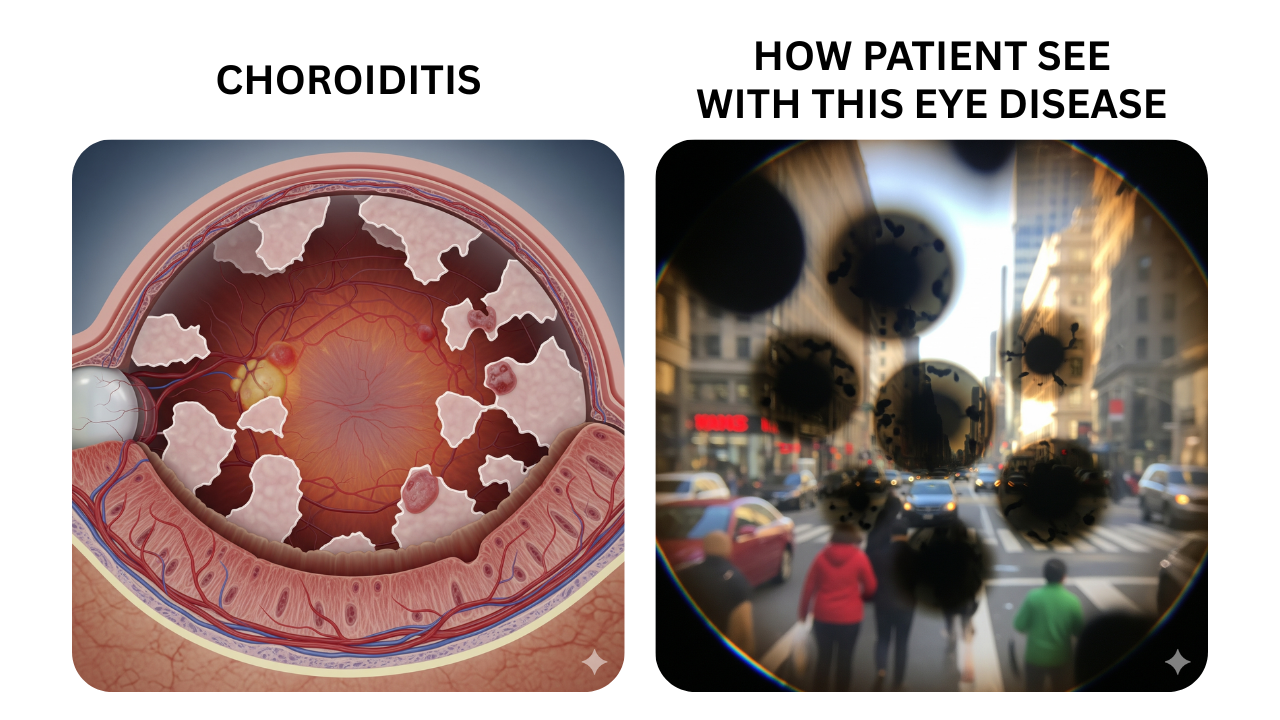
Choroiditis Inflammation of the choroid layer behind the retina, often with floaters and blurred vision.
Lens and Cataract
Cataract Clouding of the natural lens causes hazy vision, glare and faded colours. Ayurveda can support early-stage care and prevention, but a mature cataract needs surgery. Read early signs of cataract.
Cornea and the Surface of the Eye
Dry Eye Disease Gritty, burning, tired eyes from poor tear quality or quantity. See our guide to Ayurvedic dry eye treatment.
Corneal Diseases Degenerations and dystrophies of the clear front layer of the eye.
Corneal Opacity and corneal scars Scarring that clouds the cornea after infection or injury.
Corneal Ulcer A painful sore on the cornea, often with redness and light sensitivity. This needs prompt medical care, then supportive healing care.
Keratitis Inflammation or infection of the cornea.
Keratoconus The cornea thins and bulges into a cone shape, causing distorted vision that changes often.
Pterygium A fleshy growth on the white of the eye that can creep onto the cornea, linked to dust, wind and sun.
Allergic Conjunctivitis and conjunctivitis Itching, redness and watering from allergy or infection. Read home remedies for watery or itchy eyes and what causes red eyes.
Watering of the eyes (epiphora) Excess tearing from dryness, allergy or a blocked tear duct.
Blepharitis and Stye Inflamed, crusty eyelid margins or a painful lump on the eyelid, often from blocked oil glands.
Uveitis Inflammation inside the eye causing pain, redness, light sensitivity and floaters.
Children, Eye Muscles and Eyelids
Amblyopia (lazy eye) One eye does not develop normal vision. Early treatment matters most. See lazy eye Ayurvedic treatment.
Squint Eyes that do not align properly.
Diplopia Double vision from muscle, nerve or other causes.
Ptosis A drooping upper eyelid that may block vision.
How We Approach Eye Disease
- Examination in our Eye OPD with vision testing and diagnostic checks
- Diagnosis by specialists trained in Ayurveda ophthalmology
- Treatment plan using therapies such as Netra Tarpanam, Akshi Sekam, Anjanam and herbal medicines
- Inpatient care where needed through our Eye IPD
- Diet and lifestyle guidance to protect results. See diet tips and our Yoga Club
- Prevention and follow-up through preventive ophthalmology
What You Can Realistically Expect
Results depend on the condition, its stage and how consistently you follow the plan.
- Early and functional problems such as dry eye, strain and allergy often respond well.
- Chronic and degenerative conditions need a longer plan, and the goal is usually to arrest or slow further deterioration and improve comfort.
- Structural damage that has already happened may not reverse in any system of medicine, and we will tell you so honestly.
Continue prescribed medicines and regular monitoring unless your doctor advises otherwise.
When You Should See a Doctor Urgently
Sudden vision loss, severe eye pain, a curtain or shadow across vision, many new floaters with flashes, an eye injury or a chemical splash need immediate emergency care. See sudden eye pain: when to worry.
Helpful Reading
Frequently Asked Questions
Q1. Which eye diseases can Ayurveda help with?
Answer: Ayurveda may offer supportive and symptomatic care for conditions such as dry eye, refractive errors, retinal and optic nerve problems, corneal conditions, allergic eye disease, and eyelid problems. Suitability is determined after a proper eye examination.
Q2. Can Ayurveda cure glaucoma or diabetic retinopathy?
Answer: Ayurveda has not been proven to cure glaucoma or reverse established retinal or optic nerve damage. Ayurvedic care may be considered as supportive care alongside an ophthalmologist’s prescribed treatment. Never delay or discontinue standard treatment.
Q3. Can cataract be treated without surgery?
Answer: Early cataracts may be monitored by an eye specialist, but no Ayurvedic treatment has been proven to reverse a cataract. Surgery is generally recommended when cataracts significantly affect vision. Learn more about cataract treatment.
Q4. Is there keratoconus treatment in Gurgaon?
Answer: OM Ayurveda Eye Care offers supportive Ayurvedic care for keratoconus following an assessment. Corneal procedures and other necessary interventions should be managed by a qualified corneal specialist.
Q5. Can retinitis pigmentosa be cured?
Answer: There is currently no established cure for most forms of retinitis pigmentosa. Supportive care and counselling may help patients manage the condition. Visit our page on retinitis pigmentosa.
Q6. How do I know which eye disease I have?
Answer: Book an Eye OPD consultation at OM Ayurveda Eye Care for an eye examination and appropriate diagnosis.
Q7. Do you treat children?
Answer: Yes, OM Ayurveda Eye Care provides care for children with conditions such as lazy eye (amblyopia) and squint, alongside standard vision correction and specialist care when needed.
Q8. How long does Ayurvedic eye treatment take?
Answer: Treatment duration depends on the eye condition, its severity, and the individual treatment plan. Some symptoms may improve sooner, while chronic conditions require longer-term management and regular reviews.
Q9. Will I have to stop my current medicines?
Answer: No. Do not stop or change prescribed medicines without consulting your treating doctor. Inform your eye specialist about any Ayurvedic medicines or therapies you are considering.
Q10. Is Ayurvedic eye treatment painful?
Answer: Many Ayurvedic therapies are designed to be gentle and relaxing. However, the experience depends on the procedure and the individual’s condition. Any treatment involving the eyes should be performed under appropriate professional supervision.
Q11. Do you offer inpatient treatment?
Answer: Yes, OM Ayurveda Eye Care offers inpatient services through its Eye IPD facility. Contact the clinic to confirm admission criteria and available services.
Q12. Where is OM Ayurveda Eye Care located?
Answer: OM Ayurveda Eye Care is located at 1093, Sector 40, near Unitech Cyber Park, Gurugram, Haryana. Contact the clinic to confirm appointment availability and consultation timings.