

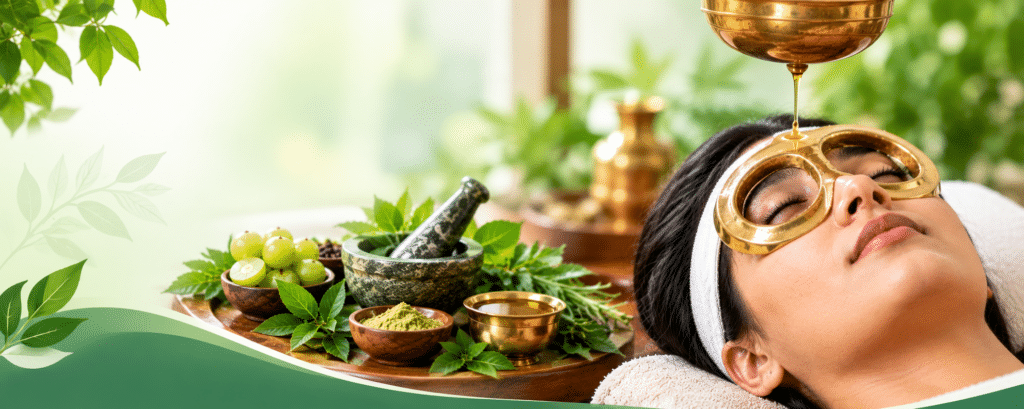
Gritty, burning, tired eyes that never quite feel comfortable are a sign your eyes are not getting the lubrication and nourishment they need. If artificial tear drops give only short relief and the problem keeps coming back, Ayurvedic dry eye treatment looks at the root cause instead of only covering the symptom.
At Om Ayurveda Eye Care Centre, dry eye care is planned around your symptoms, your lifestyle and your individual constitution, not a one-size-fits-all package.
What Is Dry Eye Syndrome?
This page is your treatment guide. For the condition overview, see our Dry Eye Disease page, and for every therapy we offer, see Ayurvedic eye treatment.
Dry eye syndrome happens when your eyes do not make enough tears, or when the tears are poor in quality and evaporate too fast. Tears are not just water. They have an oily layer, a watery layer and a mucus layer, and a fault in any of them causes symptoms.
Common Signs of Dry Eye
- A gritty or sandy feeling in the eyes
- Burning, stinging or redness
- Tired eyes by evening, especially after screen use
- Blurred vision that clears when you blink
- Watering that comes and goes (a reflex response to dryness)
- Sensitivity to light, wind or air conditioning
- Difficulty wearing contact lenses
- Stringy mucus in or around the eyes
Quick Self-Check
Answer honestly. If you say yes to three or more, it is worth getting your eyes examined.
- Do your eyes feel gritty or burning most days?
- Do you spend more than 6 hours a day on screens?
- Do you work in an air-conditioned room?
- Do you use eye drops more than twice a day?
- Does your vision blur and clear with blinking?
- Do your eyes water in wind or bright light?
- Do you wake with dry or sticky eyes?
- Do you wear contact lenses?
- Are you over 40?
- Do you sleep less than 6 hours?
Common Causes of Dry Eye
Cause | How it dries the eyes |
Long screen hours | Blinking drops by almost half, so tears evaporate |
Air conditioning and fans | Dry, moving air pulls moisture off the eye |
Poor sleep | Eyes cannot repair and lubricate overnight |
Ageing | Tear production slowly falls after 40 |
Hormonal change | Menopause often brings dryness |
Contact lens use | Lenses disturb the tear film |
Eyelid gland problems | Blocked oil glands let tears evaporate fast |
Some medicines | Certain tablets reduce tear production |
Dehydration and poor diet | Less fluid and less nourishing fat for the tear film |
Eye surgery such as LASIK | Corneal nerves are temporarily disturbed |
Medical conditions | Some autoimmune and thyroid conditions are linked |
How Ayurveda Understands Dry Eyes
In Ayurveda, dry eyes are linked to imbalance of Vata and Pitta in the eyes, with depletion of the lubricating Tarpaka Kapha. Vata brings dryness and strain, while Pitta adds heat, redness and burning. Long screen hours, irregular sleep, stress, spicy food and dehydration all push these doshas out of balance.
Treatment therefore focuses on cooling, lubricating and nourishing the eye tissues, and on fixing the habits that keep the problem alive. Read the classical background in Ayurveda ophthalmology.
Ayurvedic Dry Eye Treatment Options We Offer
Netra Tarpanam
A medicated ghee is held gently over the closed eyes inside a herbal dough boundary. It nourishes the eye surface, reduces burning and helps restore comfort. Most patients are advised a course of consecutive sessions. Read more in our guide to Netra Tarpanam and how long results take, and see the therapy page for Netra Tarpanam.
Netra Basti (for chronic cases)
A deeper and longer version of Tarpanam for stubborn, long-standing dryness. See Netra Basti vs Netra Tarpanam.
Akshi Sekam and Cooling Therapies
A gentle stream of cooling medicated liquid over the eyes soothes burning and redness. See Akshi Sekam and Netra Pindi.
Shirodhara and Head Therapies
When stress, poor sleep or headaches are part of the picture, Shirodhara and Takra Dhara calm the nervous system, which often eases dryness too.
Herbal Medicines and Eye Washes
Cooling herbal washes such as properly prepared Triphala water can soothe irritation. Self-preparation needs care, so read Triphala eye wash safety first. Internal herbal medicines are chosen to your constitution. See Ayurvedic herbs for eye health.
Panchakarma Support (selected chronic cases)
When dryness keeps returning despite local therapy, your specialist may suggest a systemic approach. See Panchakarma for eye disorders.
A Day Plan for Dry Eyes
Morning
- Splash the closed eyes with cool, clean water
- Drink a glass of water before tea or coffee
- Have a nourishing breakfast with a little ghee if advised
Work hours
- Follow the 20-20-20 rule: every 20 minutes, look 20 feet away for 20 seconds
- Blink fully and often, and take a longer break every hour
- Keep AC and fan air from blowing straight onto your face
- Keep the screen slightly below eye level and at arm’s length
Evening
- Stop heavy screen use well before bed
- Do palming and gentle eye exercises. Read eye yoga exercises
- Have a light, warm dinner
Night
- Sleep on a regular schedule
- A gentle foot massage with oil, as advised, helps many people relax and sleep better
Diet for Dry Eyes
- Include amla, leafy greens, carrots, almonds, pomegranate and seasonal fruit
- Use ghee and healthy fats in suitable amounts
- Drink enough water and coconut water through the day
- Go easy on very spicy, fried, sour and processed foods
- Limit excess tea, coffee and alcohol, which dehydrate
Start with foods for eye health and our diet tips.
What Not to Do
- Do not use whitening (“redness relief”) drops again and again, because they can cause rebound redness
- Do not rub dry eyes, which makes irritation worse
- Do not try ghee or oils in your eyes at home
- Do not sit under a direct AC or fan blast
- Do not sleep with contact lenses in
- Do not ignore dryness that lasts for weeks
Special Situations
Contact lens users: dryness is very common. Reduce wear time, keep lenses clean and ask your specialist about breaks.
After LASIK or eye surgery: dryness can linger for months. Supportive care can help comfort, but always involve your surgeon and follow their medicine advice.
Women in menopause: hormonal change often brings dryness. Nourishing care and diet are valuable.
People who work in AC offices or at call centres: the combination of dry air and long screens is hard on the eyes. Workspace changes and periodic therapy help.
Elderly patients: tear production falls with age, so regular nourishing care and gentle routine are useful.
Children: dryness is increasingly seen with heavy screen use. Read protecting children’s eyes from screens.
Who Should Consider Ayurvedic Dry Eye Treatment?
- People with screen-related dryness and strain (why screens dry your eyes)
- Those who depend on eye drops several times a day
- Patients wanting a non-chemical, root-cause approach
- People with long-standing dryness that has not settled with drops alone
To compare options, read Ayurvedic vs allopathic dry eye treatment. You can also read our guide on how to treat dry eyes naturally at home.
What to Expect at Your Visit
- Consultation: a detailed discussion of symptoms, screen hours, sleep, diet and medical history
- Eye examination: vision testing and screening in our Eye OPD
- Assessment: your dosha pattern and the likely cause of dryness
- Plan: the right therapy, number of sessions and home care
- Follow-up: progress review, with changes to the plan if needed
How Long Does It Take to Feel Better?
- First few sessions: many patients feel cooler, calmer and more comfortable
- Over a full course: dryness, burning and fatigue usually ease more steadily
- Long term: lasting improvement depends on screen habits, sleep, diet and periodic maintenance courses
Results vary from person to person. Chronic cases may need repeat courses and admission through Eye IPD.
Cost of Dry Eye Treatment
The cost depends on the therapy advised, the number of sessions and the medicines. [ADD: starting session charges or “Please call us for current charges”]. You will be told the plan and the estimate before treatment starts.
Dry Eye Specialist Near Me: Why Om Ayurveda Eye Care
- Focus on Ayurvedic eye care (Shalakya Tantra), not general wellness. Learn more in what is Shalakya Tantra
- Treatment planned after proper assessment, not sold as a fixed package
- Honest guidance, including when you should also see an ophthalmologist
- Located in Gurugram, Sector 40, easy to reach from across Delhi NCR
Not sure how to pick a clinic? Use our checklist: how to choose an Ayurvedic eye clinic.
When You Should See an Ophthalmologist First
Get urgent medical care if dryness comes with severe pain, sudden vision loss, thick discharge, or follows an injury. Dry eye can also be linked to autoimmune and other health conditions that need medical evaluation. We are happy to work alongside your eye doctor.
Ayurvedic care for dry eyes may include traditional therapies such as Netra Tarpanam, along with dietary and lifestyle guidance. The appropriate approach depends on the cause and severity of dryness and should be determined after an eye examination.
The number of Netra Tarpanam sessions varies depending on the individual’s symptoms and clinical assessment. A qualified practitioner can recommend a suitable schedule after evaluating your condition.
No. Do not stop or reduce prescribed eye drops without consulting your ophthalmologist. If your symptoms improve, your doctor can assess whether any changes to your treatment are appropriate.
Some Ayurvedic therapies are designed to be gentle and relaxing. However, the experience depends on the procedure and the individual’s condition. Any therapy involving the eyes should be performed under appropriate professional supervision.
OM Ayurveda Eye Care Centre in Sector 40, Gurugram, offers eye consultations and Ayurvedic care options. Visit the Eye OPD page to learn more about consultations.
Results vary according to the underlying cause, severity of dryness, environment, screen habits, sleep, and treatment plan. Dry eye symptoms can return if contributing factors persist, so ongoing care and follow-up may be necessary.
Common causes include prolonged screen use, ageing, dry or air-conditioned environments, hormonal changes, contact lens use, certain medications, and conditions that affect tear production or quality.
Yes. Dry eyes can cause fluctuating or blurry vision, which may temporarily improve after blinking. Persistent or sudden blurred vision should be assessed by an eye specialist.
Mild symptoms may improve with regular screen breaks, frequent blinking, adequate hydration, and avoiding direct airflow from fans or air conditioners. Persistent symptoms require an eye examination to identify the cause and determine suitable treatment.
Dry eye symptoms are more common in people with diabetes. Blood sugar management and regular eye examinations are important for identifying and managing potential eye complications.
Some cases improve substantially when the underlying cause is addressed, but dry eye is often a chronic condition that requires ongoing management. Long-term relief depends on the cause, severity, and consistency of appropriate treatment.
Supportive care may help address eye discomfort after LASIK, but any treatment should first be discussed with your LASIK surgeon. Avoid eye therapies until your surgeon confirms that they are safe during your recovery.
Your eye specialist will advise whether you should temporarily stop wearing contact lenses. Lenses generally need to be removed before eye procedures, and you should follow the practitioner’s instructions regarding when to wear them again.