

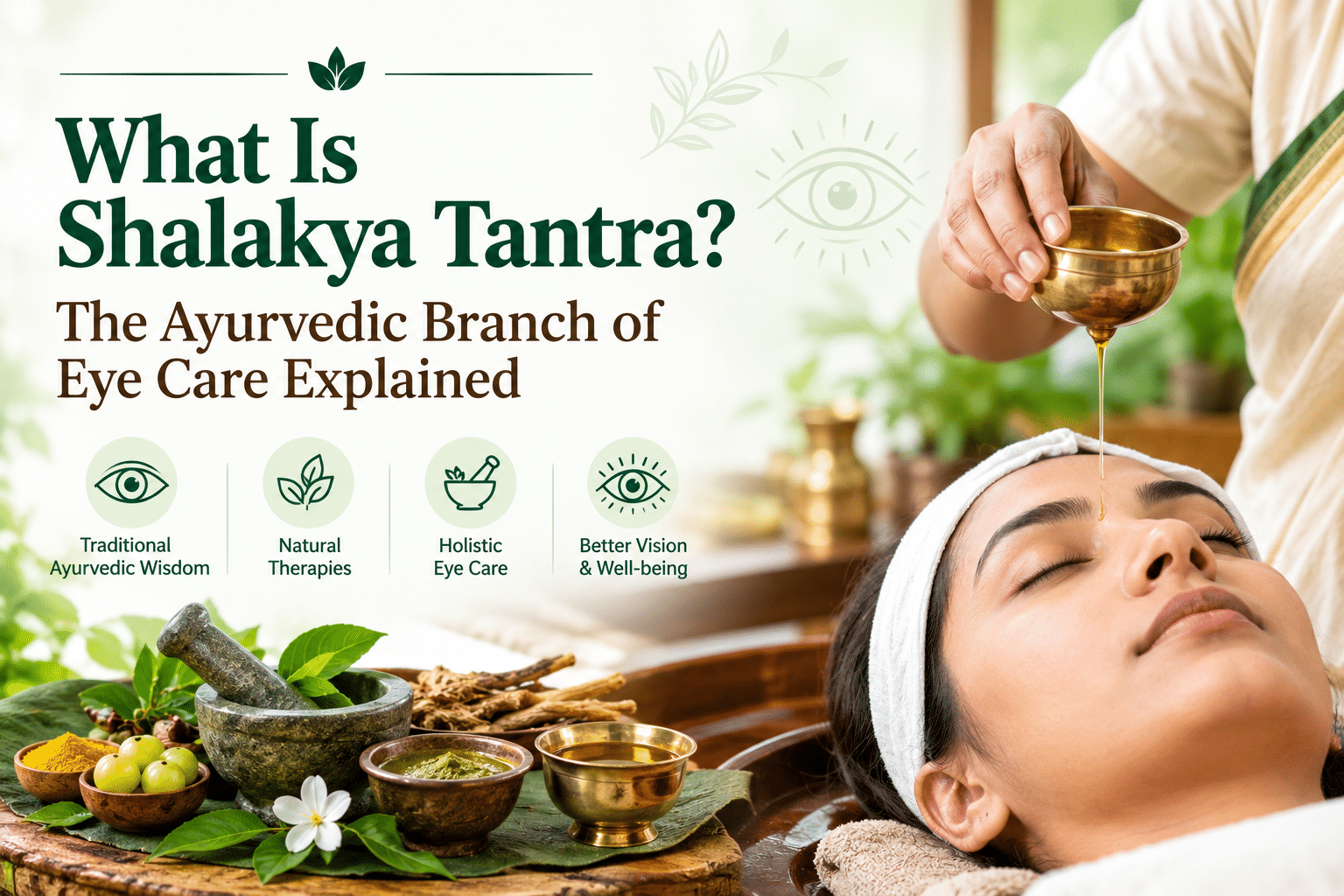
If you’ve been researching Ayurvedic eye care, you’ve probably come across the term “Shalakya Tantra.” It sounds technical, and it is, but understanding what it actually means can help you know exactly what kind of care to expect when you visit an Ayurvedic eye specialist.
What Does Shalakya Tantra Mean?
Shalakya Tantra is one of the eight classical branches of Ayurveda (Ashtanga Ayurveda), specifically dealing with diseases of the organs located above the neck, including the eyes, ears, nose, throat, and head. The word “Shalaka” refers to a probe or instrument traditionally used in these treatments, and “Tantra” means science or system, together forming the science of treating disorders using specialized instruments and techniques for the head and sensory organs.
Within this broader branch, the sub-specialty focused specifically on the eyes is often what people mean when they refer to Ayurvedic eye care or Ayurvedic ophthalmology.
Why Shalakya Tantra Matters for Eye Health
Unlike general wellness practices, Shalakya Tantra is a formally structured medical specialty with its own diagnostic methods, classification of diseases, and treatment protocols, developed and refined over centuries through classical texts like the Sushruta Samhita. This means a genuine Shalakya Tantra specialist has training specifically focused on eye and ENT disorders, not just general Ayurvedic medicine.
What Conditions Does Shalakya Tantra Address?
Classical Ayurvedic texts describe a detailed classification of eye disorders under Shalakya Tantra, broadly corresponding to conditions we recognize today, including:
- Dry eye syndrome and general eye dryness
- Conjunctivitis and eye infections
- Early-stage cataract (Timira) and its progression
- Refractive errors and eye strain
- Watering, itching, and allergic eye conditions
- Eyelid disorders, including drooping (ptosis) and styes
- Retinal and optic nerve-related concerns as supportive care alongside modern treatment
- General eye fatigue and computer vision syndrome in modern practice
Key Treatments Under Shalakya Tantra
Kriyakalpa (The Seven Classical Eye Procedures)
Shalakya Tantra describes seven specific ocular treatment procedures collectively known as Kriyakalpa, tailored to different conditions:
- Tarpana – medicated ghee retained over the eyes for deep nourishment (commonly known as Netra Tarpanam)
- Putapaka – a herbal preparation applied to extract juice that’s instilled into the eyes
- Seka – a gentle, continuous stream of medicated liquid poured over the eyes
- Ashchyotana – instillation of medicated eye drops
- Anjana – application of medicated collyrium/ointment to the eyes
- Bidalaka – a herbal paste applied around the eyes
- Netra Basti – a more prolonged version of Tarpana using a taller dough boundary for deeper conditions
Each of these is selected based on the specific condition, its stage, and the patient’s individual constitution.
Diagnostic Approach
A genuine Shalakya Tantra consultation typically involves assessment of dosha imbalance (Vata, Pitta, Kapha) specific to the eyes, alongside a general examination, to determine both the immediate symptom and its root cause before recommending treatment.
How Is This Different from General Ayurvedic Practice?
Many general Ayurvedic practitioners have broad training across all areas of Ayurveda. A Shalakya Tantra specialist, however, has focused post-graduate training specifically in eye, ear, nose, and throat disorders, similar to how an ophthalmologist specializes within modern medicine. This distinction matters when choosing where to seek treatment for a specific eye condition, general wellness advice differs significantly from specialized diagnostic and treatment expertise.
What to Expect at a Shalakya Tantra Consultation
- A detailed history of your symptoms, lifestyle, and screen habits
- Assessment of dosha imbalance specific to your eye condition
- Possible integration with modern diagnostic findings if you’ve already seen an ophthalmologist
- A personalized treatment plan, which may include one or more Kriyakalpa procedures, dietary guidance, and lifestyle recommendations
- Realistic expectations about timeline and what the treatment can and cannot achieve
Frequently Asked Questions
Q: Is Shalakya Tantra a replacement for seeing an ophthalmologist?
A: Not for every condition. For serious or urgent eye conditions (like glaucoma, retinal detachment, or advanced cataracts), modern ophthalmological care is essential. Shalakya Tantra is best used as complementary or supportive care, or for conditions like general dryness and strain where it offers strong standalone benefit.
Q: How do I verify if a practitioner is genuinely trained in Shalakya Tantra?
A: Look for a BAMS (Bachelor of Ayurvedic Medicine and Surgery) degree followed by an MD/MS specifically in Shalakya Tantra, which indicates focused specialization rather than general Ayurvedic training alone.
Q: Can Shalakya Tantra treatments be combined with modern eye medication?
A: Yes, in most cases, as long as both practitioners are aware of your full treatment plan and there’s coordinated care, particularly important for serious conditions like glaucoma or diabetic eye disease.
Final Thoughts
Shalakya Tantra is a genuine, structured medical specialty within Ayurveda focused specifically on eye and sensory organ health, offering time-tested procedures like Netra Tarpanam and Netra Basti for conditions ranging from dry eyes to early cataract support. Understanding this specialty helps you make informed decisions about seeking the right kind of care for your specific eye concern.
If you’re considering Ayurvedic eye treatment, seeking a genuinely trained Shalakya Tantra specialist ensures you receive care based on classical diagnostic principles rather than generic remedies.