


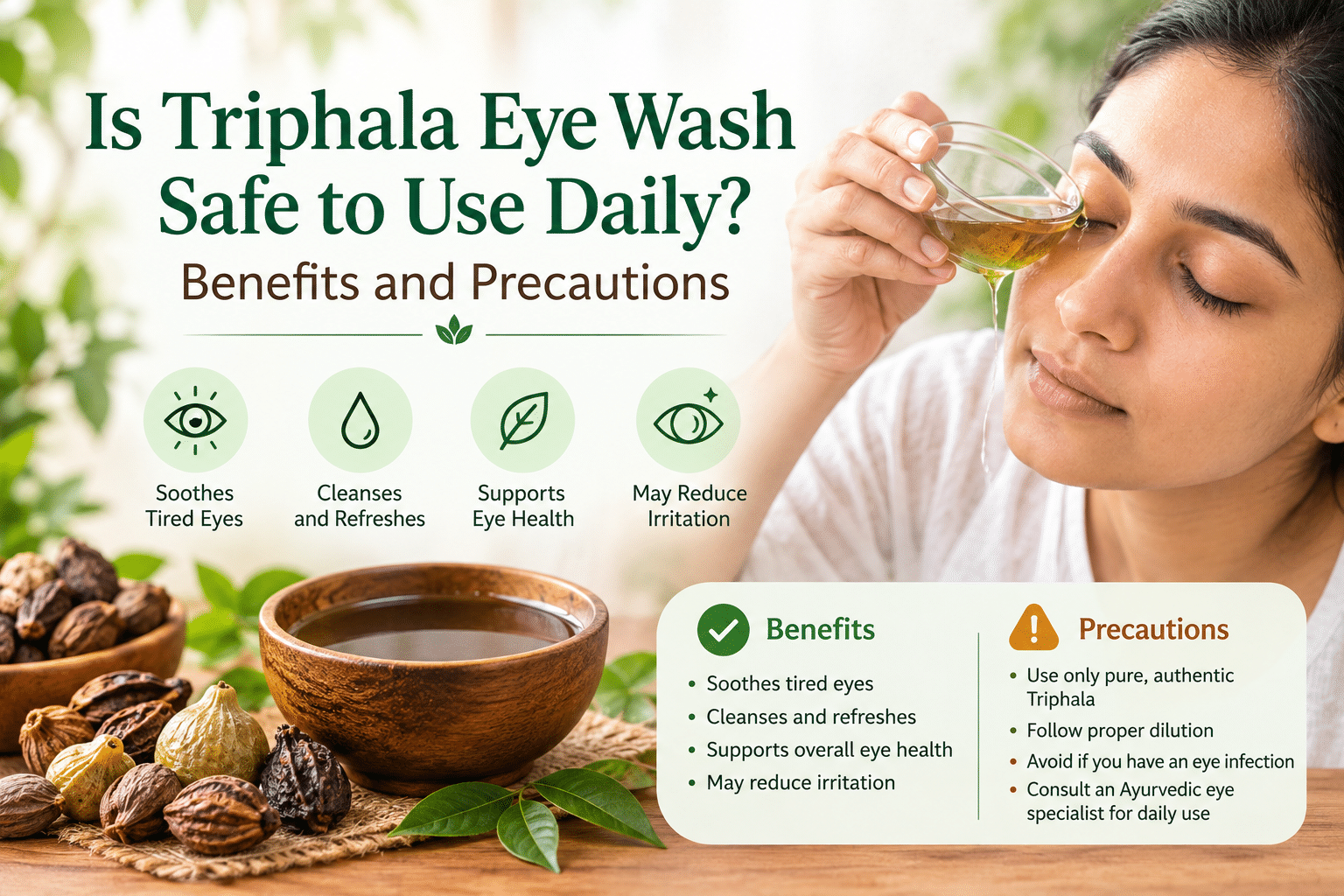
Triphala eye wash has become a popular natural remedy for tired, irritated, or dry eyes, especially among people looking for alternatives to chemical-based eye drops. But is it actually safe to use every single day, and is there a right and wrong way to prepare it? Here’s a clear, practical breakdown.
What Is Triphala Eye Wash?
Triphala is a classical Ayurvedic formulation made from three fruits, Amalaki (Indian gooseberry), Bibhitaki, and Haritaki. When used internally, it’s known for supporting digestion. When prepared as a diluted, strained eye wash, it’s traditionally used for external eye care, taking advantage of its natural antioxidant, anti-inflammatory, and mildly astringent properties.
Benefits of Triphala Eye Wash
1. Reduces Irritation and Redness
The natural anti-inflammatory compounds in Triphala can help calm mild irritation, redness, and the burning sensation associated with eye strain or environmental exposure.
2. Supports Eye Hygiene
A properly prepared Triphala wash can help gently cleanse the eye surface, potentially reducing minor debris or residue buildup.
3. Rich in Antioxidants
Triphala is high in Vitamin C and other antioxidant compounds, which may help protect eye tissue from oxidative stress over time, particularly relevant given constant screen exposure in daily life.
4. Traditionally Used for Dry Eye Support
While not a replacement for dedicated therapies like Netra Tarpanam, Triphala wash is often used as a supportive, everyday practice for mild dryness and general eye comfort.
How to Prepare Triphala Eye Wash Correctly
Proper preparation is essential for safety:
- Soak 1 teaspoon of pure, good-quality Triphala powder in a cup of clean water overnight (using filtered or boiled-and-cooled water)
- In the morning, strain the mixture thoroughly through a fine muslin cloth, multiple times if needed, to remove all particulate matter
- Ensure the final liquid is completely clear, with no visible sediment, before use
- Use a clean eye cup or dropper to rinse the eyes gently
Never use unstrained or poorly filtered Triphala water in the eyes, as residual particles can cause irritation or scratching of the sensitive eye surface.
Is Daily Use Safe?
For most people, a properly prepared and thoroughly strained Triphala eye wash used once daily is generally considered safe as part of a regular eye care routine. However, “generally safe” doesn’t mean risk-free for everyone, safety depends heavily on correct preparation and individual eye sensitivity.
Important Precautions
- Always use properly strained solution. Even tiny particles can cause corneal irritation or micro-scratches
- Use fresh preparation. Don’t store Triphala water for more than 24 hours, as it can develop bacterial growth
- Avoid if you have an active eye infection. Using any home eye wash during conjunctivitis or infection can worsen the condition or spread it
- Discontinue if irritation occurs. If you experience increased redness, burning, or discomfort after use, stop immediately
- Don’t substitute for prescribed treatment. If you have a diagnosed eye condition, Triphala wash should complement, not replace, your prescribed treatment
- Patch test first. If trying it for the first time, use a small amount and observe for any adverse reaction before continuing regular use
Who Should Be Extra Cautious?
- People with known eye allergies or sensitivities
- Those recovering from recent eye surgery
- Anyone with an active eye infection or unexplained eye pain
- Contact lens wearers (remove lenses before use, and wait before reinserting)
In these cases, it’s best to consult an Ayurvedic eye specialist before starting Triphala eye wash, rather than self-administering it.
Frequently Asked Questions
Q: Can Triphala eye wash replace artificial tear drops for dry eyes?
A: It can be a helpful supportive practice, but for moderate to severe dry eye syndrome, it’s best used alongside, not instead of, treatment recommended by your eye specialist.
Q: How long does it take to see benefits from daily Triphala eye wash?
A: Many people notice reduced irritation and improved comfort within 1-2 weeks of consistent, correctly prepared use, though results vary by individual.
Q: Can I use store-bought Triphala eye drops instead of preparing it at home?
A: If choosing a commercial product, ensure it’s specifically formulated and tested for ophthalmic use, not just a general Triphala powder or extract, as eye-safe formulations require sterile, precise preparation.
Final Thoughts
Triphala eye wash, when prepared correctly and used with reasonable precautions, is generally considered a safe and gentle addition to a daily eye care routine for most people. The key is proper straining, fresh preparation, and discontinuing use if any irritation occurs.
If you’re new to this practice or have an existing eye condition, it’s worth checking with an Ayurvedic eye specialist first to make sure it’s appropriate for your specific situation.