


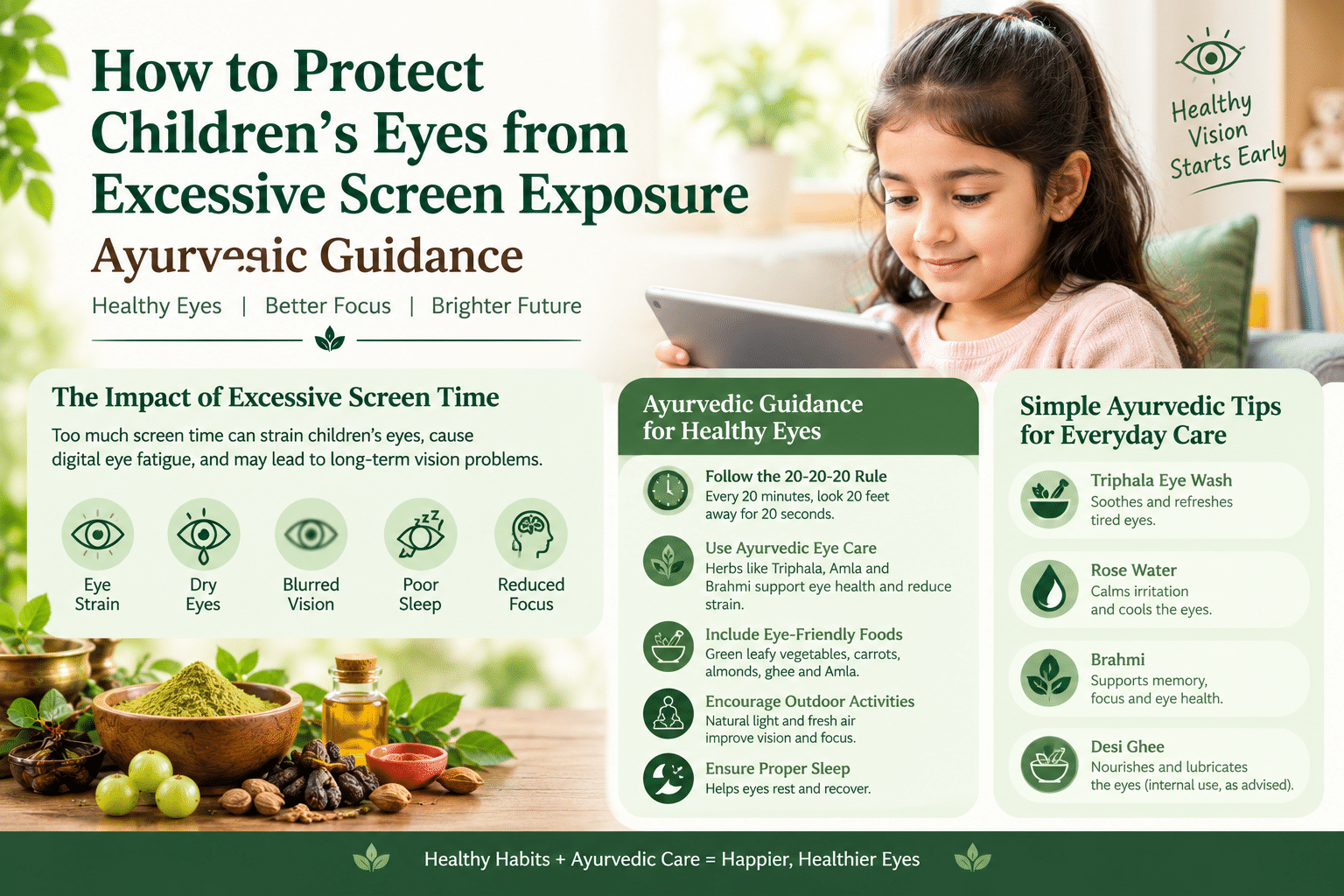
Online classes, tablets for entertainment, and early smartphone access mean today’s children are exposed to screens far earlier and far longer than any previous generation. Pediatric ophthalmologists worldwide have flagged a sharp rise in childhood myopia linked directly to this shift. Alongside standard eye care advice, Ayurveda offers additional, practical guidance for protecting young eyes.
Why Children’s Eyes Are More Vulnerable
Children’s eyes are still developing, and the eyeball itself is still growing in size and shape during childhood and early adolescence. Excessive close-up screen focus during this developmental window is strongly linked to elongation of the eyeball, a key factor in myopia (nearsightedness) progression. Additionally, children often don’t recognize or communicate eye strain the way adults do, meaning problems can go unnoticed longer.
Signs Your Child May Be Experiencing Eye Strain
- Frequent eye rubbing
- Sitting unusually close to screens or books
- Complaining of headaches, especially after screen use
- Squinting to see distant objects (like a classroom board)
- Reduced interest in outdoor activities
- Excessive blinking or watering eyes after screen sessions
Ayurvedic Guidance for Protecting Children’s Eyes
1. Prioritize Outdoor Time
This is one of the most well-supported recommendations, and Ayurveda has long emphasized natural sunlight exposure as beneficial for overall health, including the eyes. Encouraging at least an hour of outdoor play daily gives children’s eyes a break from close-focus work and exposes them to natural light, which research increasingly links to reduced myopia progression.
2. Structured Screen Breaks
Apply a child-friendly version of the 20-20-20 rule: every 20 minutes of screen time, encourage looking at something far away for 20 seconds. For younger children, gamify this with simple reminders or timers rather than expecting them to self-regulate.
3. Nutrition for Developing Eyes
Ayurveda emphasizes nourishing foods during the growth years:
- Ghee in age-appropriate quantities to support overall tissue nourishment
- Carrots, leafy greens, and colorful vegetables for Vitamin A and antioxidants
- Almonds and other “Chakshushya” (eye-beneficial) foods as part of a balanced diet
- Adequate hydration, especially important for children who often forget to drink enough water
4. Consistent Sleep Schedule
Children need significantly more sleep than adults for healthy development, including eye health. Ayurveda strongly emphasizes regular sleep-wake timing, avoiding late-night screen use that can disrupt both sleep quality and eye rest.
5. Proper Screen Setup
Even young children benefit from ergonomic basics: screens positioned at a comfortable distance and slightly below eye level, adequate ambient lighting (never using devices in complete darkness), and larger screens over small phone screens when possible for extended use.
6. Gentle Eye Exercises as Play
Simple practices like focusing on near and far objects alternately, or gentle blinking games, can be introduced as fun activities rather than clinical exercises, helping children build good visual habits early.
7. Periodic Ayurvedic Eye Checkups
For children showing early signs of strain or a family history of high myopia, periodic consultation with an Ayurvedic eye specialist (Shalakya Tantra) can help monitor development and introduce supportive therapies like age-appropriate Netra Tarpanam if genuinely needed.
Setting Realistic Screen Time Boundaries
While Ayurvedic principles support balance and moderation, practical modern guidance suggests:
- Avoiding screens entirely for children under 2 years, except for supervised video calls
- Limiting recreational screen time for young children to no more than an hour a day
- Ensuring even necessary educational screen time is broken up with frequent breaks and outdoor time
When to See a Specialist
Don’t wait for symptoms to worsen. Take your child for an eye examination if:
- They frequently complain of headaches or eye discomfort
- Teachers report they’re struggling to see the board clearly
- You notice consistent squinting or unusually close screen viewing distance
- There’s a family history of high myopia or other significant eye conditions
Early detection and intervention, whether through corrective lenses, lifestyle changes, or supportive Ayurvedic care, can meaningfully slow myopia progression during these critical growth years.
Frequently Asked Questions
Q: Can Ayurvedic remedies alone prevent my child from needing glasses?
A: Not always. If a genuine refractive error develops, glasses or other corrective measures are typically needed. Ayurvedic guidance works best as a preventive and supportive measure alongside proper eye care, not as a replacement for necessary correction.
Q: How much outdoor time is genuinely helpful for children’s eye health?
A: Most experts recommend at least 60-90 minutes of outdoor time daily, as natural light exposure has shown a meaningful protective effect against myopia progression in multiple studies.
Q: Is it too early to worry about screen-related eye strain in preschoolers?
A: No, eye strain and visual habits form early. Establishing good screen habits and outdoor time routines from a young age is far easier than correcting problems later.
Final Thoughts
Protecting children’s eyes in a screen-heavy world requires a combination of practical boundaries, like structured breaks and outdoor time, and Ayurvedic principles around nutrition, sleep, and balance. The earlier these habits are established, the better positioned your child’s eyes are to handle the digital demands of growing up today.
If you’re noticing early signs of strain in your child, consider consulting an Ayurvedic eye specialist experienced in pediatric eye care for personalized guidance suited to your child’s specific needs.