

Diabetic retinopathy is one of the most serious complications of long-term, poorly controlled diabetes, and it’s understandably alarming when someone is diagnosed with it. Given the appeal of natural treatment options, many patients ask whether Ayurveda can reverse this condition. Here’s an honest, clear answer based on what this condition actually involves.
What Is Diabetic Retinopathy?
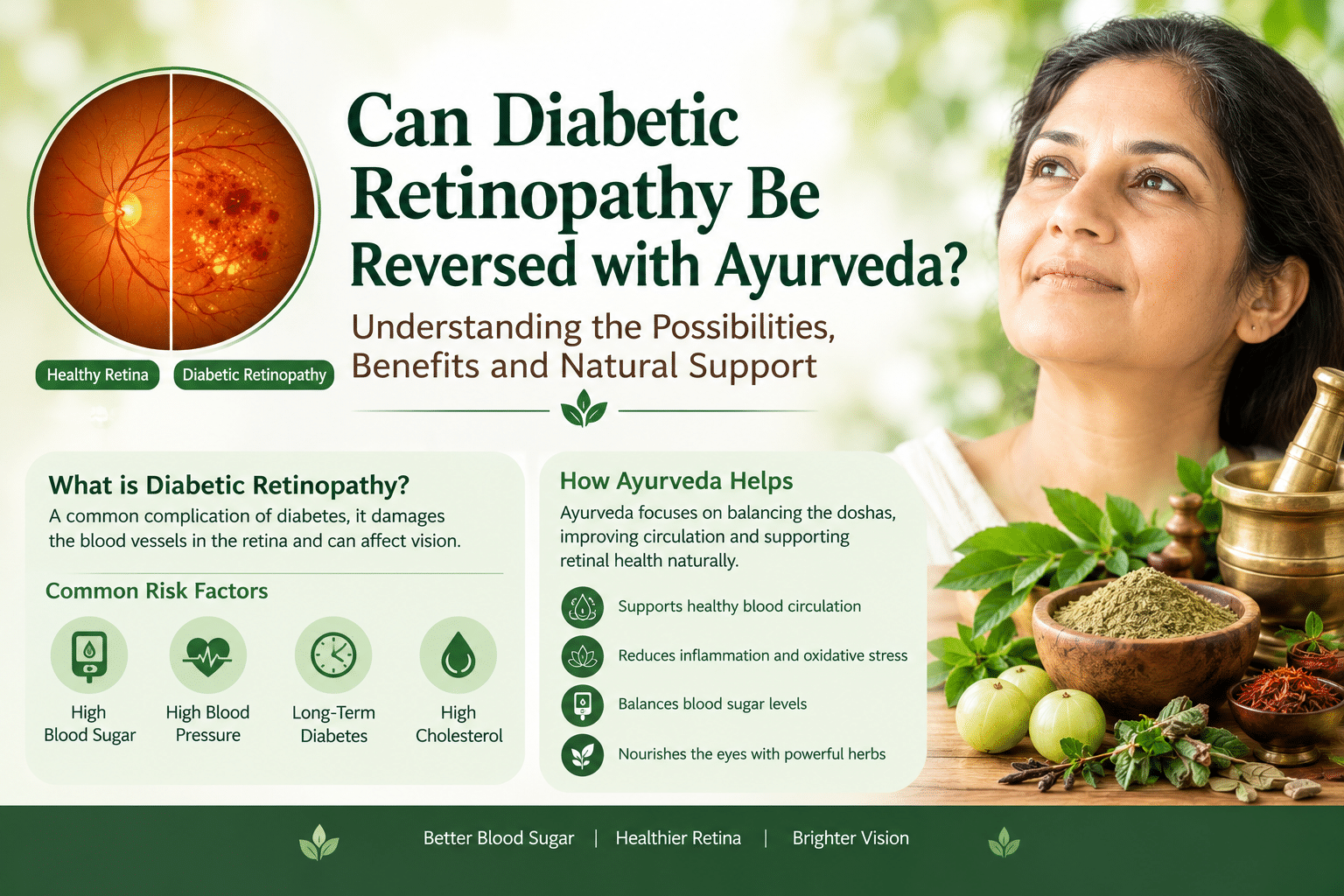
Diabetic retinopathy occurs when consistently high blood sugar levels damage the tiny blood vessels in the retina, the light-sensitive layer at the back of the eye. Over time, this can cause these vessels to leak, swell, or grow abnormally, potentially leading to significant vision loss or even blindness if left unmanaged.
It progresses through stages, from mild non-proliferative retinopathy to more advanced proliferative retinopathy, where abnormal new blood vessels form and pose a serious risk to vision.
Can Ayurveda Reverse Diabetic Retinopathy?
Here’s the honest truth: once retinal blood vessel damage has occurred, particularly in moderate to advanced stages, it cannot be fully reversed by Ayurveda or any other system of medicine currently available. Damaged retinal tissue and already-formed abnormal blood vessels typically require medical intervention, such as laser treatment (photocoagulation), anti-VEGF injections, or in some cases, surgery.
Any claim promising complete reversal of established diabetic retinopathy through Ayurvedic treatment alone should be approached with significant skepticism.
What Ayurveda Can Genuinely Contribute
While reversal of existing damage isn’t realistic, Ayurveda can play a meaningful supportive role, particularly in early stages and in managing the root cause, diabetes itself.
1. Blood Sugar Management
Since diabetic retinopathy progression is directly tied to blood sugar control, Ayurvedic approaches to diabetes management, including dietary changes, herbs like Karela (bitter gourd) and Methi (fenugreek), and lifestyle modification, can indirectly help slow further retinal damage by supporting better glycemic control.
2. Supporting Early-Stage Changes
In the very early, mild non-proliferative stage, before significant vessel damage has occurred, Ayurvedic therapies focused on improving circulation and reducing oxidative stress, alongside strict blood sugar management, may help slow progression to more advanced stages.
3. Netra Tarpanam for General Eye Nourishment
When appropriately used alongside medical monitoring, Netra Tarpanam may support general eye tissue health and comfort, though it does not treat the retinal blood vessel damage itself.
4. Antioxidant Support
Diabetic retinopathy involves significant oxidative stress on retinal tissue. Ayurvedic dietary recommendations rich in antioxidants, such as amla, leafy greens, and other Vitamin C sources, may offer general supportive benefit, though this should never replace regular retinal monitoring and treatment.
5. Overall Metabolic Health
Ayurveda’s holistic approach to diabetes, addressing diet, stress, sleep, and digestion together, can support better overall metabolic control, which is the single most important factor in preventing diabetic retinopathy from worsening.
What You Should Never Do
- Never delay or skip recommended laser treatment or anti-VEGF injections in favor of Ayurvedic treatment alone, especially once retinopathy has progressed beyond the mild stage
- Never stop diabetes medication without medical supervision, believing Ayurvedic herbs alone will control blood sugar adequately
- Never rely on unverified “Ayurvedic cure” products claiming to reverse retinopathy, as these are not backed by credible evidence and can lead to dangerous delays in necessary treatment
- Never skip regular retinal screening, even if you’re pursuing Ayurvedic supportive care, as diabetic retinopathy can progress silently without early symptoms
The Right, Integrated Approach
If you have diabetic retinopathy and want to explore Ayurvedic support:
- Continue all prescribed treatment and regular retinal screenings with your ophthalmologist without interruption
- Inform your Ayurvedic practitioner of your diagnosis, current stage, and treatment plan
- Focus Ayurvedic efforts primarily on blood sugar management and overall metabolic health, the areas where it can genuinely help
- Use supportive therapies like Netra Tarpanam only as a complement, with full awareness of your retinal condition
- Never substitute Ayurvedic care for medically necessary interventions like laser treatment when your ophthalmologist recommends it
Frequently Asked Questions
Q: Can Ayurvedic herbs alone control diabetes well enough to prevent retinopathy?
A: While certain herbs can support blood sugar management, most people with diabetes need a combination of medication, diet, and lifestyle changes. Relying solely on herbs without proper monitoring can allow blood sugar to remain poorly controlled, increasing retinopathy risk.
Q: Is it safe to combine Ayurvedic treatment with anti-VEGF injections or laser treatment?
A: Generally yes, as long as both your ophthalmologist and Ayurvedic practitioner are aware of your full treatment plan and there’s no conflicting advice, such as delaying necessary medical treatment.
Q: Does diabetic retinopathy always lead to blindness?
A: Not if caught and managed early. Regular screening, good blood sugar control, and timely medical treatment when needed can prevent severe vision loss in most cases.
Final Thoughts
Diabetic retinopathy cannot be reversed through Ayurveda once significant retinal damage has occurred, and this needs to be stated clearly to avoid dangerous delays in necessary treatment. However, Ayurveda can play a genuinely valuable supportive role, primarily through better blood sugar management and overall metabolic health, especially when integrated responsibly with your ongoing medical care.
If you have diabetic retinopathy, the safest path forward is working with both your ophthalmologist and an Ayurvedic practitioner together, rather than choosing one system over the other.