

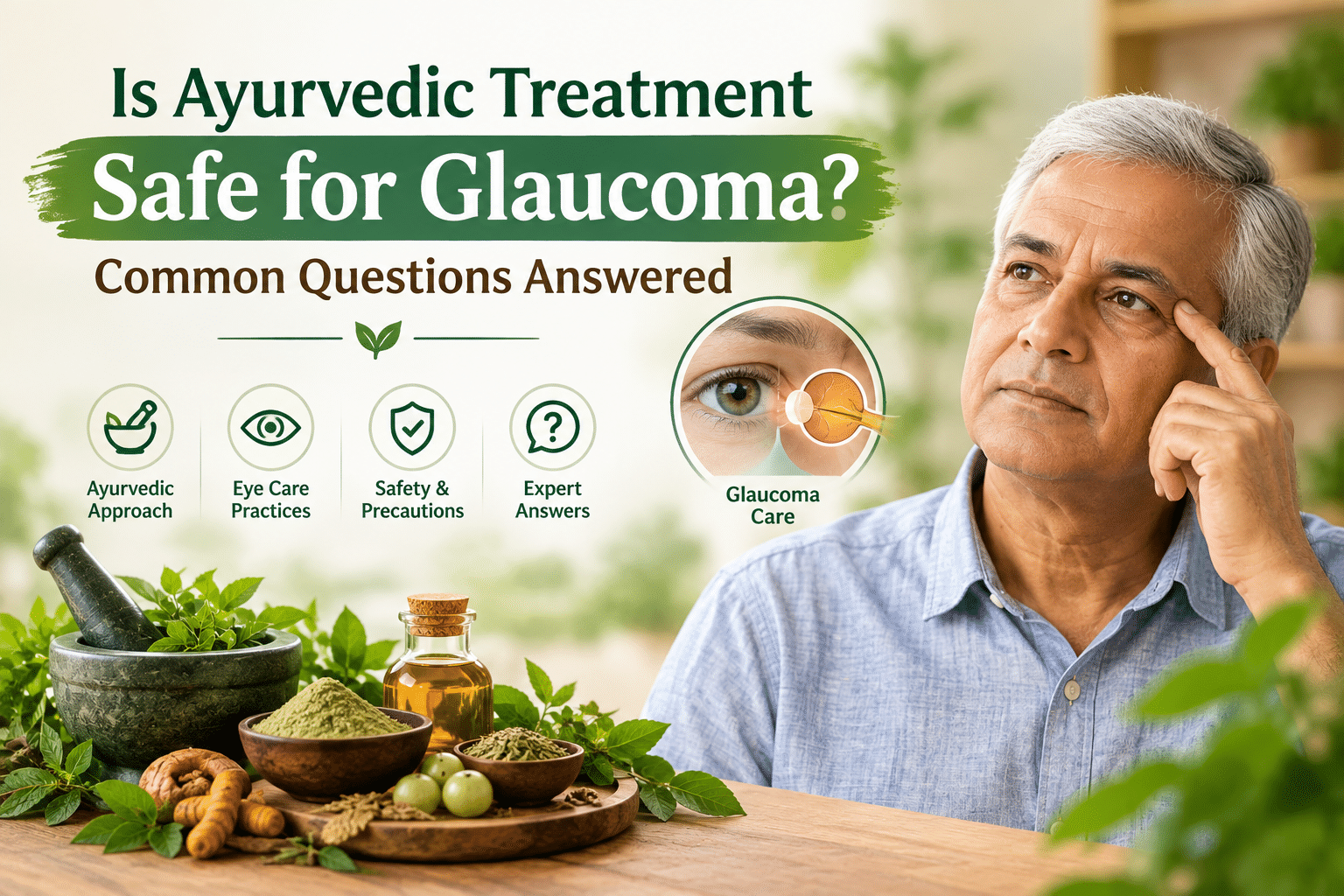
Glaucoma is a condition that damages the optic nerve, usually due to increased pressure inside the eye, and can lead to irreversible vision loss if left unmanaged. Given how serious it is, it’s completely understandable that patients ask: can Ayurveda help, and is it even safe to try alongside conventional treatment? Let’s address this honestly and clearly.
Understanding Glaucoma First
Glaucoma is often called the “silent thief of sight” because it typically progresses without noticeable symptoms until significant vision loss has already occurred. It requires ongoing monitoring of eye pressure and, in most cases, lifelong management through eye drops, laser treatment, or surgery, depending on severity.
This is important context: glaucoma is not a condition to self-treat with alternative medicine alone. Any Ayurvedic approach must work alongside, not instead of, your ophthalmologist’s care.
Is Ayurvedic Treatment Safe for Glaucoma?
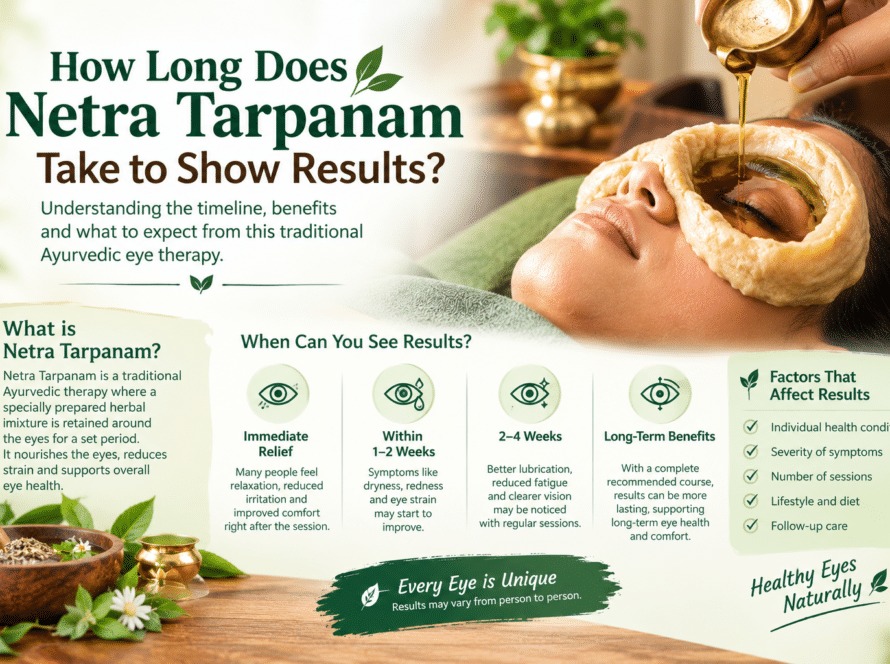
The honest answer is: it depends on how it’s used. Ayurvedic therapies that focus on general eye nourishment, like Netra Tarpanam or dietary adjustments, are generally considered safe as supportive care when done by a qualified practitioner who is aware of your glaucoma diagnosis and current treatment plan.
However, certain things should be approached with caution:
- Unverified herbal eye drops claiming to “cure” glaucoma should be avoided, as they haven’t been tested for safety in glaucoma patients and could potentially worsen eye pressure or interact with prescribed medication
- Stopping prescribed glaucoma medication in favor of Ayurvedic treatment alone is dangerous and can lead to irreversible vision loss
- Certain yoga inversions (like headstands) are sometimes advised against for glaucoma patients, as they may temporarily increase intraocular pressure, so any yoga practice should be discussed with both your ophthalmologist and Ayurvedic practitioner
What Ayurveda Can Genuinely Offer as Supportive Care
1. Stress Reduction
Chronic stress is known to affect intraocular pressure. Ayurvedic practices like Abhyanga (oil massage), meditation, and breathing exercises (Pranayama, excluding pressure-increasing variations) can help manage stress levels as part of overall glaucoma management.
2. Netra Tarpanam for General Eye Nourishment
When performed by a specialist aware of the glaucoma diagnosis, Netra Tarpanam may help support overall eye tissue health, though it should never be seen as a treatment for the elevated eye pressure itself.
3. Dietary Support
Ayurveda recommends a Pitta-balancing diet rich in antioxidants (leafy greens, amla, and other Vitamin C-rich foods) to support overall eye health, alongside, not in place of, prescribed treatment.
4. Gentle Eye Exercises
Simple relaxation techniques like palming can support overall eye comfort, though they have no effect on intraocular pressure itself and should not be mistaken for pressure-lowering treatment.
What You Should Never Do
- Never discontinue prescribed glaucoma eye drops or medication without your ophthalmologist’s approval
- Never rely solely on Ayurvedic remedies for pressure control, glaucoma requires regular monitoring with proper equipment (tonometry, visual field tests) that only an ophthalmologist can provide
- Never try unverified herbal products marketed online as a “glaucoma cure”
The Right Way to Combine Both Approaches
If you’re interested in Ayurvedic support for glaucoma, the safest path is:
- Continue all prescribed treatment from your ophthalmologist without interruption
- Inform your Ayurvedic practitioner about your diagnosis, current medications, and eye pressure readings
- Use Ayurvedic therapies strictly as supportive, general eye and stress care, not as pressure-lowering treatment
- Keep up with regular eye pressure checks and monitoring as advised by your ophthalmologist
Frequently Asked Questions
Q: Can Ayurveda cure glaucoma completely? A: No. Glaucoma-related optic nerve damage is not reversible, and there is no cure, Ayurvedic or otherwise, currently available. Management focuses on preventing further damage.
Q: Can Netra Tarpanam lower eye pressure in glaucoma? A: There’s no reliable evidence that Netra Tarpanam directly lowers intraocular pressure. It may support general eye health but should never replace prescribed pressure-lowering treatment.
Q: Is yoga safe for glaucoma patients? A: Certain poses, especially head-down inversions, may temporarily raise eye pressure and are generally advised against. Gentle, non-inversion yoga and breathing exercises are usually considered safer, but should be discussed with your doctor first.
Final Thoughts
Ayurveda can play a genuinely supportive role in glaucoma management, primarily through stress reduction, general eye nourishment, and dietary support, but it should never replace your prescribed medical treatment. Glaucoma requires consistent monitoring and pressure control that only a qualified ophthalmologist can provide.
If you’re considering Ayurvedic support alongside your existing treatment, make sure to consult a practitioner who understands the seriousness of your condition and will coordinate care responsibly, rather than one offering false promises of a cure.