

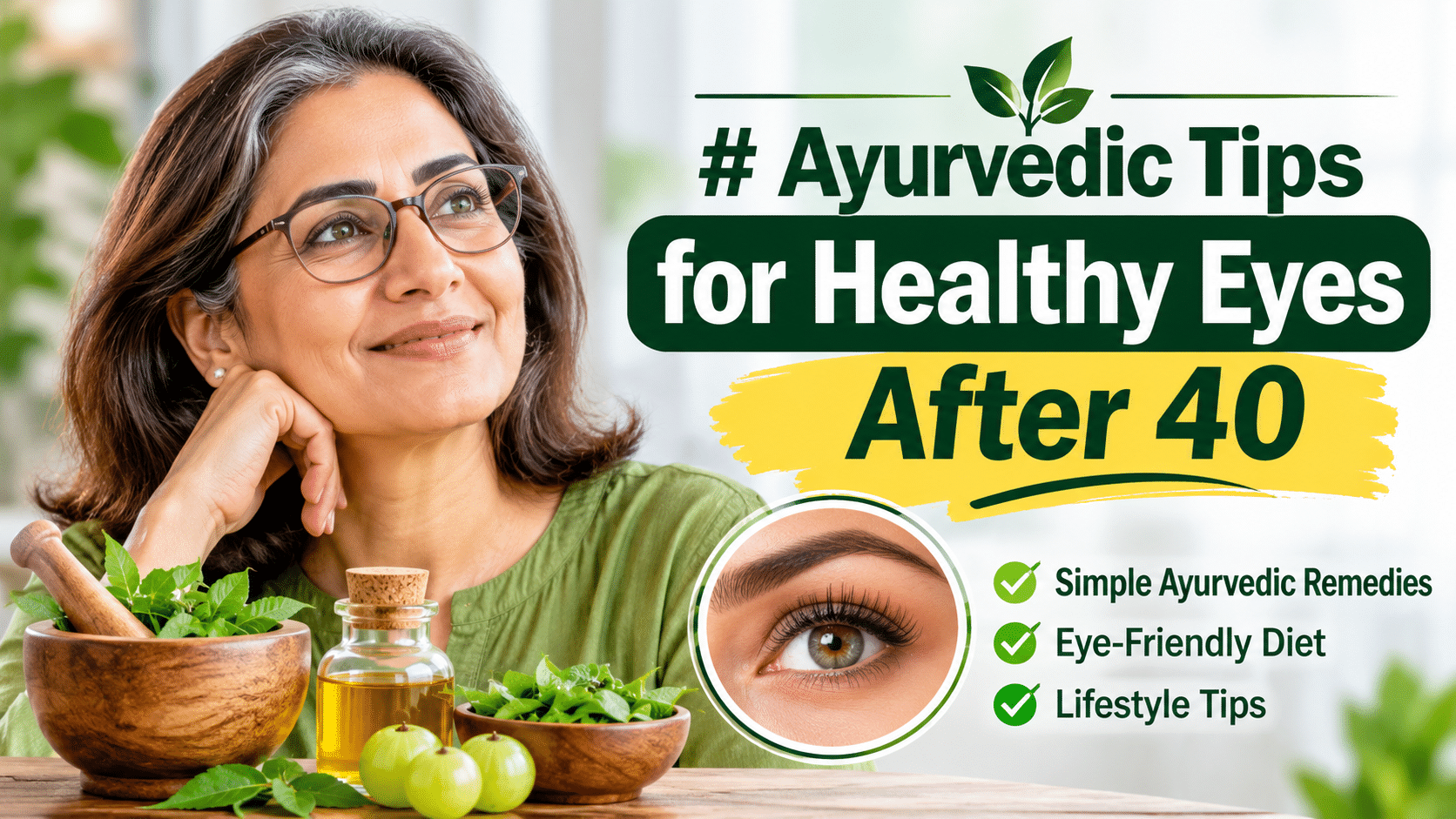
Turning 40 often brings a noticeable shift in vision, needing to hold your phone a little further away, or finding fine print harder to read than it used to be. This is a normal part of aging (presbyopia), but it’s also a good checkpoint to start being more intentional about long-term eye health. Ayurveda offers a practical, holistic framework for exactly this stage of life.
What Changes in Your Eyes After 40?
Presbyopia
The natural lens gradually loses flexibility, making it harder to focus on close-up objects, this is why reading glasses often become necessary in your 40s.
Increased Dryness
Tear production tends to decrease with age, making dry eyes more common and often more noticeable than in earlier years.
Higher Risk of Certain Conditions
The risk of cataracts, glaucoma, and age-related macular degeneration all increase significantly after 40, making regular screening more important.
Slower Adaptation to Light Changes
Adjusting between bright and dim lighting, such as walking into a dark room from sunlight, tends to take longer as you age.
Ayurvedic Principles for Eye Health After 40
Ayurveda categorizes life into stages, with the years after 40 often associated with a gradual shift toward Vata dominance in the body. This explains why dryness, both generally and in the eyes specifically, tends to increase during this period, making Vata-balancing practices particularly relevant.
Practical Ayurvedic Tips for Healthy Eyes After 40
1. Prioritize Ghee in Your Diet
Ghee has long been valued in Ayurveda for lubricating and nourishing tissues, particularly relevant as natural tear production and tissue elasticity decline with age. A moderate daily amount, suited to your individual constitution, supports overall Vata balance.
2. Regular Netra Tarpanam
Periodic Netra Tarpanam sessions, perhaps every few months, can help proactively address the increased dryness and tissue nourishment needs that come with aging, rather than waiting until symptoms become bothersome.
3. Antioxidant-Rich Diet
Foods like Amla, leafy greens, and colorful vegetables become increasingly important after 40 to help counter the cumulative oxidative stress linked to conditions like cataracts and macular degeneration.
4. Consistent Sleep Schedule
Since Vata imbalance, worsened by irregular sleep, affects eye dryness and overall tissue health, maintaining a consistent sleep routine becomes even more important for eye health as you age.
5. Daily Abhyanga (Oil Massage)
Regular self-massage with warm sesame oil, particularly beneficial for Vata balance, supports overall circulation and relaxation, indirectly benefiting eye health and reducing age-related strain.
6. Protect Eyes from UV Exposure
Wearing UV-protective sunglasses becomes increasingly important after 40, as cumulative UV exposure is a known risk factor for cataracts and macular degeneration.
7. Regular Eye Screenings
Ayurveda’s emphasis on prevention aligns well with modern recommendations: comprehensive eye exams, including checks for glaucoma, cataracts, and retinal health, become increasingly important starting around 40, even without noticeable symptoms.
8. Manage Blood Sugar and Blood Pressure
Since both diabetes and hypertension significantly increase the risk of various eye conditions, maintaining metabolic health through Ayurvedic dietary principles and lifestyle practices supports long-term eye health as a byproduct of overall wellness.
9. Stay Hydrated
Adequate water intake supports tear film production, which becomes increasingly important to actively maintain as natural tear production declines with age.
10. Practice Eye Exercises
Simple practices like palming, near-far focusing, and gentle eye rotations help maintain eye muscle flexibility and can ease the transition as focusing ability naturally changes with presbyopia.
Building a Sustainable Eye Care Routine After 40
- Daily: Blinking consciously, staying hydrated, and a nutrient-rich diet with ghee and antioxidants
- Weekly: Abhyanga oil massage and eye exercises like palming and focusing drills
- Periodically (every few months): A course of Netra Tarpanam for deeper nourishment
- Annually: A comprehensive eye exam, including checks for glaucoma, cataracts, and retinal health
When to See a Specialist
Beyond routine annual screenings, see a specialist promptly if you notice:
- Sudden or significant changes in vision
- Difficulty with night driving that’s new or worsening
- Increased glare sensitivity
- Any of the warning signs associated with cataracts, glaucoma, or macular degeneration discussed elsewhere
Frequently Asked Questions
Q: Is it normal to need reading glasses in my 40s even if I’ve never worn glasses before? A: Yes, presbyopia affects nearly everyone eventually, typically becoming noticeable in the 40s, regardless of previous vision history.
Q: Can Ayurvedic practices slow down presbyopia? A: Presbyopia is a natural, structural aging process of the lens that Ayurveda cannot reverse. However, supportive practices can improve overall eye comfort and may ease the associated strain during this transition.
Q: How often should I get Netra Tarpanam after 40 for preventive care? A: This varies by individual, but many practitioners recommend a course every 3-6 months as a preventive measure, adjusted based on your specific dryness levels and overall eye health.
Final Thoughts
Your 40s are a meaningful checkpoint for eye health, a good time to shift from reactive to proactive care. Combining Ayurvedic practices like regular Netra Tarpanam, a nourishing diet, and consistent sleep with modern preventive screenings gives you the best foundation for maintaining clear, comfortable vision well into the following decades.
If you’re noticing new changes in your vision as you cross 40, consulting an Ayurvedic eye specialist for a personalized preventive care plan is a worthwhile step to take now rather than later.