

Ayurveda has long emphasized the connection between nutrition, digestion, and overall health, and eye care is no exception.
In Ayurvedic tradition, the eyes are considered a Pitta-dominant organ and are associated with Alochaka Pitta, which is linked to visual perception.
If you’re wondering how you can naturally support your eye health through your diet, choosing nutrient-rich foods and maintaining balanced eating habits can be a useful part of your overall eye-care routine.
Here’s a practical guide to some of the foods traditionally valued in Ayurveda, along with nutrients known to support healthy vision.
Why Does Diet Matter for Eye Health in Ayurveda?
According to Ayurvedic principles, the eyes are closely associated with Alochaka Pitta.
From an Ayurvedic perspective, excessive consumption of very spicy, oily, sour, or heavily processed foods may contribute to an imbalance that can be associated with symptoms such as:
- Eye discomfort
- Burning sensation
- Redness
- Sensitivity
- General irritation
A balanced, nutrient-rich diet, on the other hand, can support overall nourishment and wellness.
From a modern nutritional perspective, several nutrients—including vitamin A, vitamin C, vitamin E, lutein, zeaxanthin, and omega-3 fatty acids—are important for maintaining healthy eyes.
Top Ayurvedic and Nutrient-Rich Foods for Eye Health
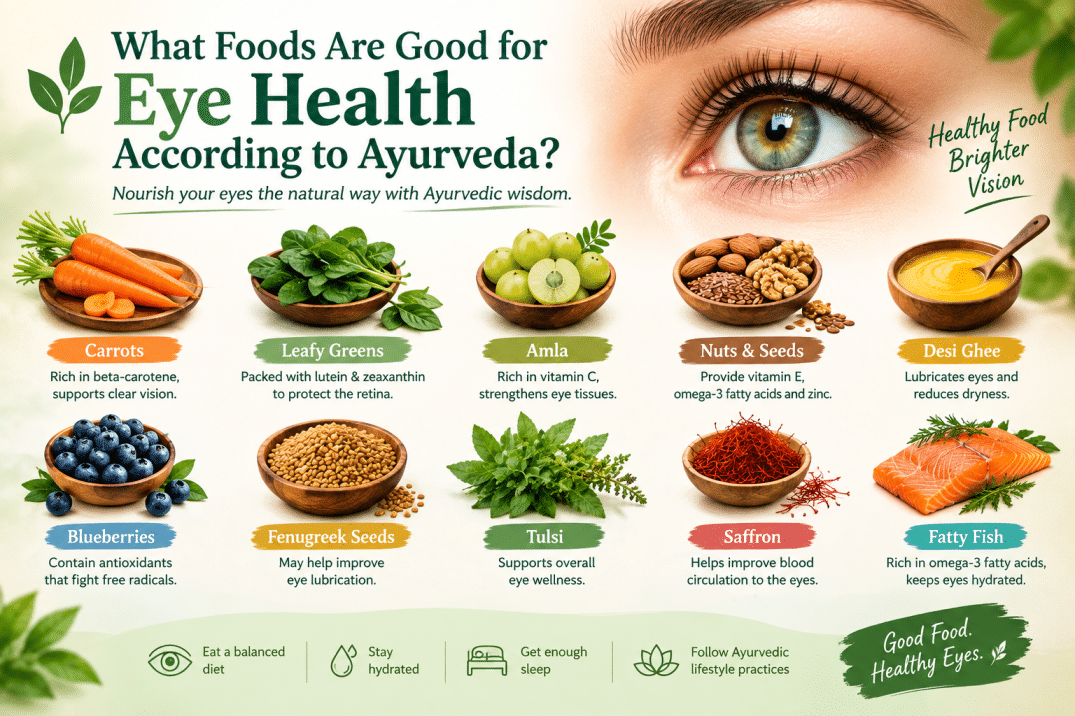
1. Ghee (Clarified Butter)
Ghee has an important place in traditional Ayurvedic nutrition and is commonly associated with nourishment and Pitta balance.
It can be included in the diet in moderate quantities, depending on an individual’s overall dietary needs.
Ghee is also used in certain traditional Ayurvedic procedures, including Netra Tarpanam, but consuming ghee and using it therapeutically around the eyes are two different applications.
How to include it:
- Add a small amount to cooked vegetables or grains.
- Use it as part of a balanced meal.
- Keep overall fat intake appropriate for your dietary needs.
2. Amla (Indian Gooseberry)
Amla, also known as Indian gooseberry, is highly valued in Ayurveda.
It is naturally rich in vitamin C and antioxidant compounds, making it a useful addition to a nutrient-rich diet.
Amla can be consumed in different forms, including:
- Fresh amla
- Amla powder
- Unsweetened preparations
- As part of traditional formulations
Its antioxidant content may support overall cellular health, including the tissues involved in vision.
3. Carrots
Carrots are well known for their beta-carotene content.
Beta-carotene can be converted into vitamin A by the body, and vitamin A is essential for normal vision.
Vitamin A plays an important role in maintaining the normal function of the retina and is particularly important for low-light vision.
Easy ways to include carrots:
- Raw or lightly cooked carrots
- Carrot soup
- Vegetable preparations
- Carrot-based salads
Carrots support normal eye health but do not eliminate refractive errors such as myopia or astigmatism.
4. Almonds
Almonds provide nutrients such as vitamin E, an antioxidant that helps protect cells from oxidative stress.
They can be included as part of a balanced diet and are traditionally considered nourishing.
Simple option:
Have a small serving of almonds as part of breakfast or a snack.
Soaking almonds overnight is a common traditional practice, but it is not necessary for their nutritional value.
5. Triphala
Triphala is a classical Ayurvedic formulation made from:
- Amalaki
- Bibhitaki
- Haritaki
It is traditionally used for a variety of purposes in Ayurveda.
Triphala contains plant compounds with antioxidant properties and is commonly discussed in Ayurvedic approaches to eye wellness.
However, Triphala preparations should not automatically be used as eye drops or eye washes. Anything placed directly into the eyes should be specifically prepared for ophthalmic use and recommended by an appropriately qualified professional.
6. Leafy Greens
Leafy green vegetables such as spinach, fenugreek leaves, kale, and other greens can provide important nutrients, including lutein and zeaxanthin.
These carotenoids are naturally present in the retina and are associated with maintaining healthy visual function.
Try adding leafy greens to:
- Dal
- Vegetable dishes
- Soups
- Smoothies
- Salads
A varied diet containing different vegetables is more useful than relying on a single “eye-health” food.
7. Coconut Water
Coconut water is a refreshing source of fluids and naturally occurring electrolytes.
For people who enjoy it, it can be included as part of a balanced and well-hydrated diet.
However, coconut water should not be considered a treatment for chronic dry eye or other eye diseases.
For persistent dryness or irritation, professional evaluation is more appropriate.
8. Pomegranate
Pomegranate provides antioxidants and can be a nutritious addition to a balanced diet.
You can consume it as:
- Fresh fruit
- Seeds added to meals
- Unsweetened juice in moderation
Rather than relying on pomegranate specifically to treat eye problems, consider it one part of an overall nutrient-rich diet.
Foods and Habits to Limit for Better Eye Health
Ayurveda emphasizes moderation and balanced eating.
Consider limiting:
- Excessively spicy foods
- Deep-fried and heavily oily foods
- Highly processed and packaged foods
- Excessive added sugar
- Excessive alcohol consumption
- Excessive caffeine intake
Rather than completely eliminating individual foods, focus on maintaining a balanced diet with plenty of vegetables, fruits, whole grains, legumes, nuts, and other nutrient-rich foods.
A Sample Ayurvedic-Inspired Day for Eye Health
Here’s a simple example of how eye-friendly foods can fit into your daily routine:
Morning
- Water
- A small serving of almonds
- Amla or another fresh fruit
Breakfast
- Vegetable porridge or oats
- Fresh fruit
- A moderate amount of ghee if appropriate for your diet
Lunch
- Dal
- Whole grains
- Leafy green vegetables
- Seasonal vegetables
- Curd or another suitable protein source
Evening
- Coconut water or fresh fruit
- A small serving of nuts or seeds
Dinner
- Light, warm, easily digestible food
- Cooked vegetables
- Dal or another suitable protein source
Avoid making dinner excessively heavy or spicy, particularly close to bedtime.
Frequently Asked Questions
How much ghee should I consume daily for eye health?
There is no universal amount of ghee that everyone should consume for eye health.
The appropriate amount depends on your overall diet, calorie requirements, health conditions, and individual nutritional needs.
If you’re following an Ayurvedic diet, an Ayurvedic practitioner can help determine an appropriate quantity based on your individual assessment.
Can diet alone fix dry eyes or blurred vision?
Diet can support overall eye and nutritional health, but it cannot correct every cause of dry eyes or blurred vision.
Persistent symptoms may be caused by conditions that require specific treatment.
If you experience ongoing dryness, blurred vision, pain, redness, flashes, floaters, or sudden changes in vision, seek professional eye care.
Is Triphala safe for daily consumption?
Triphala is widely used in traditional Ayurvedic practice, but its suitability and dosage can vary between individuals.
People taking medications, pregnant or breastfeeding individuals, or those with existing medical conditions should consult an appropriately qualified healthcare professional before using herbal formulations regularly.
Can these foods reduce my glasses number?
Eating nutritious foods can support normal eye health, but there is no single food that can reliably reduce an established glasses prescription.
Refractive errors such as myopia, hyperopia, and astigmatism are influenced by the structure and optical properties of the eye.
What is the best food for eyesight?
There isn’t one single “best” food for eyesight.
A varied diet containing leafy greens, colorful vegetables, fruits, nuts, seeds, whole grains, and adequate sources of essential nutrients is a more practical approach to supporting long-term eye health.
Final Thoughts
Ayurveda places significant emphasis on nutrition, digestion, and balanced living, and these principles can complement modern approaches to maintaining healthy eyes.
Including nutrient-rich foods such as amla, carrots, almonds, leafy greens, and other colorful fruits and vegetables can provide important vitamins, minerals, and antioxidants that support overall eye health.
At the same time, food should not be presented as a cure for conditions such as significant refractive errors, cataracts, glaucoma, retinal disease, or chronic dry eye.
For personalized guidance based on your specific eye concerns and Ayurvedic constitution, consult a qualified practitioner.
At Om Ayurveda Eye Care Centre, we can assess your individual needs and recommend an appropriate Ayurvedic eye-care and nutrition plan tailored to you.