

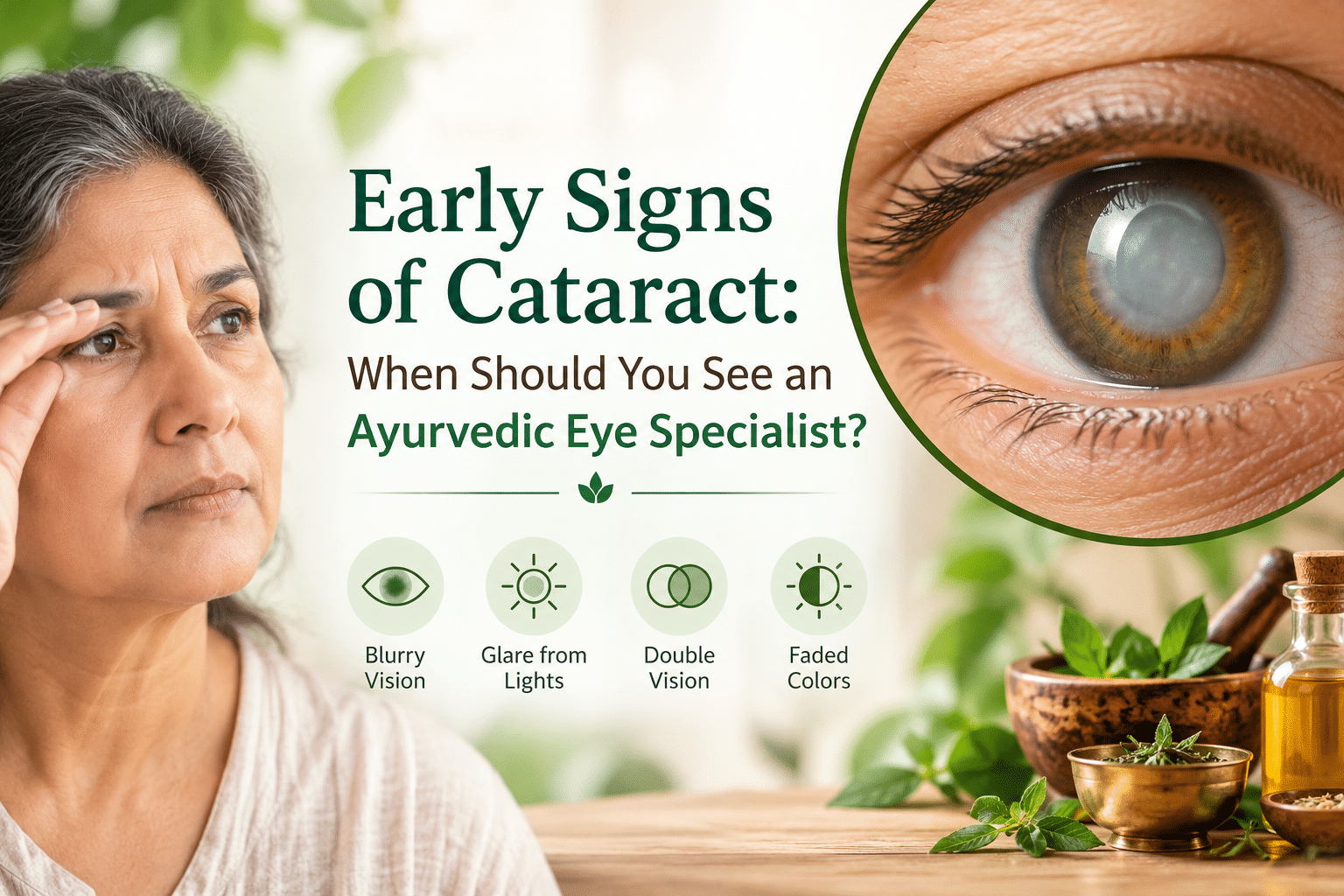
Cataracts develop so gradually that many people don’t notice the early signs until their vision has already been significantly affected. Catching these signs early matters, not just for timely treatment, but because certain Ayurvedic approaches may help slow progression when started at the right stage. Here’s what to watch for and when it’s time to act.
What Is a Cataract?
A cataract is the clouding of the eye’s natural lens, which normally is clear, causing light to scatter rather than focus properly on the retina. This leads to progressively blurred, hazy, or dimmed vision. While most commonly age-related, cataracts can also develop due to diabetes, prolonged UV exposure, certain medications, or eye injuries.
Early Signs of Cataract You Shouldn’t Ignore
1. Slightly Blurred or Hazy Vision
One of the earliest signs is a subtle blurriness, almost like looking through a slightly fogged window, that doesn’t improve with blinking or rest.
2. Increased Sensitivity to Glare
Bright lights, oncoming headlights while driving at night, or sunlight may start to feel unusually harsh or cause a halo effect around light sources.
3. Difficulty with Night Vision
Many people first notice cataracts affecting their ability to see clearly while driving at night, well before daytime vision is significantly impacted.
4. Colors Appearing Faded or Yellowish
As the lens clouds, colors can start to look less vibrant or take on a subtle yellow or brownish tint, something that’s often only noticed in comparison to how things used to look.
5. Frequent Changes in Glasses Prescription
If you find yourself needing new glasses more frequently than usual, it could be an early sign that your lens clarity is changing due to cataract development.
6. Double Vision in One Eye
Occasional double vision or “ghosting” in just one eye, even with the other eye closed, can be an early cataract symptom, particularly in certain types of cataract formation.
7. Difficulty Reading in Low Light
Struggling more than before to read in dim lighting, or needing brighter light than you used to, is a common early indicator.
The Ayurvedic Perspective on Cataracts
In Ayurveda, cataracts (referred to as “Linga Nasha” in advanced stages, with earlier stages called “Timira”) are understood as a progressive disorder involving Pitta and Kapha imbalance affecting the lens tissue. Ayurvedic texts describe distinct stages of vision deterioration, with early-stage intervention considered far more effective than attempting treatment once the cataract has matured.
Can Ayurveda Help With Early-Stage Cataracts?
This is where realistic expectations matter. Ayurveda cannot dissolve or reverse an already-formed cataract, once the lens has clouded significantly, surgery remains the only definitive treatment. However, in the early stages (Timira), Ayurvedic care may help:
- Slow the rate of progression through supportive therapies like Netra Tarpanam
- Improve overall eye comfort and reduce associated strain
- Support general eye tissue health through diet and lifestyle changes
- Manage underlying contributing factors like diabetes through a broader Ayurvedic approach
This makes early detection genuinely important, the earlier supportive care begins, the more benefit it may offer before surgery becomes necessary.
Supportive Ayurvedic Care for Early Cataracts
- Netra Tarpanam for general lens and eye tissue nourishment
- Antioxidant-rich diet including amla, leafy greens, and Vitamin C sources to counter oxidative stress on the lens
- Blood sugar management through Ayurvedic dietary guidance, since diabetes significantly accelerates cataract formation
- UV protection through sunglasses, an important preventive step alongside Ayurvedic care
- Regular monitoring to track progression and adjust the approach as needed
When to See a Specialist
You should consult an eye specialist promptly if you notice:
- Any combination of the early signs listed above, especially if they’re new or worsening
- Sudden changes in vision quality
- Difficulty with daily activities like driving or reading due to visual changes
- A family history of early cataract development
Early consultation allows for proper staging of the condition and a decision on whether supportive Ayurvedic care, closer monitoring, or surgical planning is the right next step.
Frequently Asked Questions
Q: Can Ayurvedic treatment completely prevent a cataract from progressing to surgery?
A: Not in all cases. Ayurveda can help slow progression, especially in the early stages, but once a cataract matures significantly, surgery remains the only way to restore clear vision.
Q: At what age should I start worrying about cataracts?
A: While cataracts are more common after age 60, factors like diabetes, prolonged UV exposure, or certain medications can cause earlier onset. It’s wise to get regular eye checkups starting in your 40s, especially with risk factors present.
Q: Is Netra Tarpanam helpful for people who have already had cataract surgery?
A: Yes, it can be used post-surgery for general eye nourishment and comfort, though this should be timed appropriately in consultation with both your ophthalmologist and Ayurvedic practitioner.
Final Thoughts
Recognizing the early signs of cataract, subtle blurriness, glare sensitivity, and fading colors, gives you a real window of opportunity to explore supportive Ayurvedic care that may help slow progression before surgery becomes necessary. The key is not to wait until vision is significantly affected before seeking evaluation.
If you’re noticing any of these early signs, consult an Ayurvedic eye specialist for a proper assessment and to discuss whether supportive therapies are appropriate for your stage of cataract development.