

Small specks, squiggly lines, or cobweb-like shapes drifting across your field of vision, especially noticeable against a bright background like a clear sky, are known as eye floaters. Most people experience them at some point, and while they’re usually harmless, understanding when they signal something more serious is genuinely important.
What Are Eye Floaters?
Floaters are tiny clumps of gel or cells within the vitreous, the clear, jelly-like substance that fills the inside of your eye. As these clumps drift, they cast shadows on the retina, which you perceive as small moving spots, threads, or shapes in your vision.
Common Causes of Eye Floaters
1. Age-Related Vitreous Changes
As we age, the vitreous gel gradually becomes more liquid, and the fibers within it can clump together, causing floaters to become more noticeable, especially after age 50.
2. Posterior Vitreous Detachment (PVD)
This occurs when the vitreous gel separates from the retina, a common, generally harmless age-related change, though it can cause a sudden increase in floaters and sometimes brief flashes of light.
3. Nearsightedness (Myopia)
People with significant myopia tend to experience floaters earlier and more frequently, due to the elongated shape of the eyeball affecting the vitreous structure.
4. Eye Inflammation or Infection
Conditions like uveitis can cause inflammatory cells to enter the vitreous, resulting in floaters alongside other symptoms like pain and light sensitivity.
5. Previous Eye Surgery or Injury
Trauma or previous surgical procedures can sometimes lead to changes in the vitreous that result in new floaters.
6. Diabetic Retinopathy
In more advanced cases, bleeding into the vitreous from damaged retinal blood vessels can cause a sudden increase in floaters, requiring prompt medical evaluation.
The Ayurvedic Perspective on Floaters
Ayurveda generally associates persistent floaters with an imbalance of Vata dosha affecting the subtle channels (Srotas) of the eye, along with possible Pitta involvement when there’s associated inflammation. While Ayurveda doesn’t claim to dissolve existing floaters, since they’re a physical change within the vitreous gel, supportive therapies focus on maintaining overall eye tissue health and reducing associated strain or dryness that can make floaters feel more bothersome.
When Are Floaters Harmless?
Occasional floaters that have been present for a long time, remain consistent in number and appearance, and don’t interfere significantly with vision are generally considered a normal, harmless part of aging or myopia.
When Floaters Need Urgent Medical Attention
This is the most important part of understanding floaters. Seek immediate medical evaluation if you experience:
- A sudden significant increase in the number of floaters
- Flashes of light, especially if new or increasing in frequency
- A dark shadow or curtain appearing in your peripheral vision
- Sudden blurred vision alongside new floaters
- Floaters following a recent eye injury
These symptoms can indicate a retinal tear or detachment, a serious condition that requires prompt treatment to prevent permanent vision loss. This is genuinely an emergency, not something to monitor and wait on.
Supportive Ayurvedic Care for General Eye Health
While floaters caused by normal vitreous changes generally cannot be reversed, supportive care can help with overall comfort and eye health:
1. Netra Tarpanam for General Nourishment
Regular Netra Tarpanam sessions can help maintain overall eye tissue health and may reduce associated dryness or strain that makes floaters feel more noticeable or bothersome.
2. Antioxidant-Rich Diet
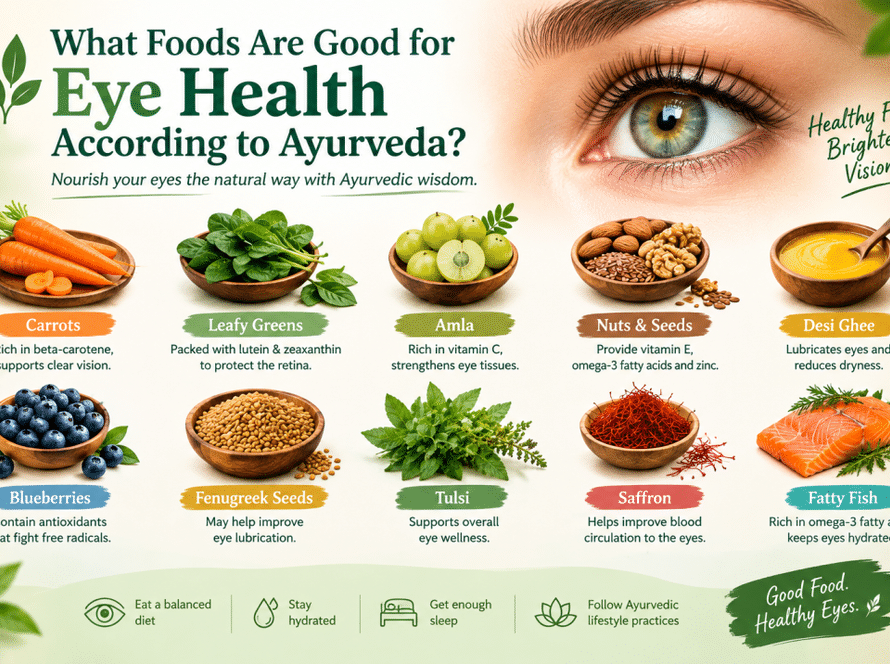
Foods rich in antioxidants, like Amla, leafy greens, and colorful vegetables, support overall eye tissue health and may help slow age-related vitreous changes.
3. Managing Underlying Conditions
If floaters are linked to an underlying condition like diabetes or high myopia, managing that condition through appropriate Ayurvedic and medical care is the most effective approach to preventing progression.
4. Reducing Eye Strain
While floaters themselves aren’t caused by screen use, reducing overall eye strain through proper breaks and Ayurvedic eye care can help you feel more comfortable and less distracted by their presence.
Learning to Live with Harmless Floaters
For most people with longstanding, stable floaters, the brain gradually adapts, and they become less noticeable over time, even without their number decreasing. This natural adaptation is one reason floaters that have been checked and confirmed as harmless generally don’t require ongoing anxiety or treatment.
Frequently Asked Questions
Q: Can floaters go away on their own? A: Some floaters may settle to a less noticeable position within the eye over time, but they generally don’t disappear completely once formed. However, your perception of them often decreases as your brain adapts.
Q: Are floaters more common in people who spend a lot of time on screens? A: Screen time itself doesn’t cause floaters, but it can make you more aware of them due to increased visual attention and potential associated dryness.
Q: Should I get floaters checked even if I’ve had them for years? A: If they’re truly longstanding and unchanged, a routine eye exam is generally sufficient. However, any new pattern, sudden increase, or accompanying symptoms like flashes should be evaluated promptly regardless of your floater history.
Final Thoughts
Eye floaters are usually a harmless part of aging or myopia, caused by normal changes within the vitreous gel. However, a sudden increase in floaters, especially with flashes of light or a shadow in your vision, is a genuine emergency warning sign that requires immediate medical evaluation to rule out retinal detachment.
For general eye health and comfort alongside harmless, stable floaters, supportive Ayurvedic care like Netra Tarpanam and an antioxidant-rich diet can help maintain overall eye tissue health for the long term.