

Search “how to improve eyesight naturally” and you’ll find hundreds of claims promising to eliminate your glasses in weeks. It’s a tempting idea, especially for people tired of increasing power every year.
But how much of this is actually true, and what does Ayurveda say about improving eyesight naturally?
Let’s separate myths from facts and understand what Ayurvedic eye care can realistically offer.
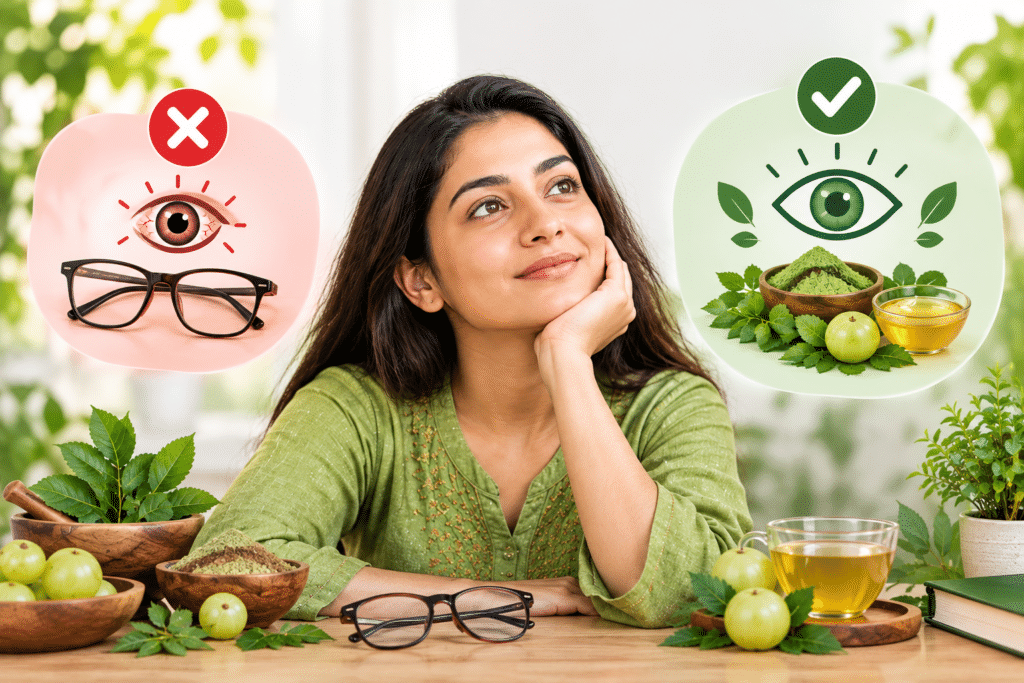
Myth #1: Ayurveda Can Completely Reverse Any Vision Problem
Fact
Ayurveda does not claim to cure every type of vision problem.
Conditions such as high myopia (nearsightedness) caused by an elongated eyeball, or hyperopia related to structural differences in the eye, cannot simply be reversed through Ayurvedic therapies.
However, Ayurvedic approaches may support overall eye health by helping with:
- Eye strain and fatigue
- Relaxation of overworked eye muscles
- General eye comfort
- Dryness-related discomfort
- Healthy lifestyle and dietary habits
For refractive errors, corrective lenses may still be necessary. Any treatment intended to manage a vision condition should be discussed with a qualified eye-care professional.
Myth #2: Eye Exercises Alone Can Remove the Need for Glasses
Fact
Eye exercises such as Trataka (candle gazing) and palming are traditionally used to promote relaxation and concentration.
They may help with:
- Reducing feelings of eye strain
- Relaxing the eyes after prolonged screen use
- Supporting comfortable focusing
- Improving relaxation and concentration
However, eye exercises should not be considered a replacement for prescription glasses, particularly for moderate or high refractive errors.
If you already have a prescription, continue using your corrective lenses as recommended by your eye-care professional.
Myth #3: All “Ayurvedic Eye Drops” Sold Online Are Safe and Effective
Fact
Not every product marketed as “Ayurvedic” is necessarily appropriate for use in the eyes.
The eyes are highly sensitive, and improperly prepared or contaminated products can cause irritation or injury.
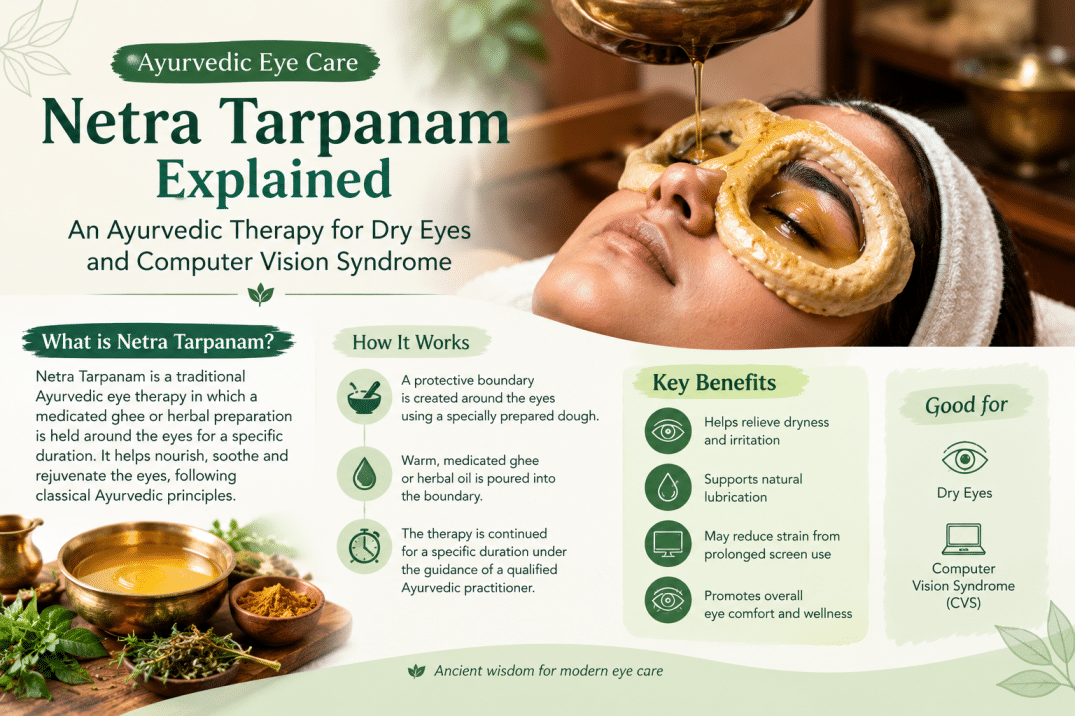
Traditional Ayurvedic procedures such as Netra Tarpanam should ideally be performed under the supervision of a qualified Ayurvedic practitioner trained in Shalakya Tantra.
Avoid putting homemade herbal preparations, oils, or unverified eye drops directly into your eyes without professional guidance.
What Ayurveda Can Genuinely Help With
1. Reducing Eye Strain and Fatigue
Modern lifestyles often involve long hours of screen exposure, which can contribute to tired, dry, or uncomfortable eyes.
Ayurvedic eye-care approaches, combined with healthy lifestyle habits, may help support eye comfort and reduce symptoms associated with eye strain.
Helpful habits include:
- Taking regular screen breaks
- Getting adequate sleep
- Staying hydrated
- Maintaining a balanced diet
- Following an appropriate eye-care routine
2. Supporting Eye Health in Children and Young Adults
Children and young adults who spend significant time on screens may experience increasing visual demands.
Ayurvedic practitioners may recommend a combination of:
- Appropriate diet
- Lifestyle modifications
- Eye-care practices
- Traditional Ayurvedic therapies where appropriate
- Regular eye examinations
However, existing myopia should be monitored by an eye-care professional. Ayurvedic care should complement, rather than replace, appropriate ophthalmic evaluation and prescribed treatment.
3. Managing Dryness and Eye Discomfort
Dry eyes can sometimes cause temporary blurred vision, burning, irritation, or a gritty sensation.
A healthy diet, adequate hydration, sufficient sleep, and appropriate screen habits can support overall eye comfort.
Foods containing nutrients important for eye health include:
- Carrots
- Spinach and other leafy greens
- Amla
- Nuts and seeds
- Other fruits and vegetables rich in antioxidants
Diet alone, however, cannot correct structural refractive errors such as significant myopia or hyperopia.
Ayurvedic Practices for Eye Health
Trataka (Candle Gazing)
A traditional practice involving focused visual attention. It is commonly associated with concentration and relaxation.
Netra Tarpanam
A traditional Ayurvedic procedure involving the application of medicated ghee around the eyes under professional supervision. It should only be performed using appropriate preparations and techniques.
Balanced, Nutrient-Rich Diet
Foods containing vitamin A, carotenoids, antioxidants, and other essential nutrients can contribute to overall eye health.
Adequate Sleep
Insufficient sleep can contribute to tired, dry, and uncomfortable eyes. Maintaining a consistent sleep schedule can support overall eye comfort.
Healthy Screen Habits
Following the 20-20-20 rule—every 20 minutes, look at something approximately 20 feet away for 20 seconds—can help reduce digital eye strain.
Can You Really Reduce Your Glasses Number Naturally?
This is one of the most common questions people ask.
The answer depends on why you need glasses in the first place.
If blurred vision is caused by temporary factors such as eye fatigue or dryness, addressing those factors may improve comfort and sometimes reduce temporary fluctuations in vision.
However, established refractive errors such as myopia, hyperopia, and astigmatism are generally related to the shape and optical properties of the eye. Lifestyle practices and Ayurvedic therapies should not be presented as guaranteed ways to eliminate prescription glasses.
The safest approach is to have your vision properly assessed before starting any treatment intended to change your prescription.
Setting Realistic Expectations
If your goal is to improve eye comfort, reduce digital eye strain, support overall eye health, or develop healthier eye-care habits, Ayurveda may have a role as part of a broader approach.
However, if your goal is to completely eliminate glasses or reverse a significant refractive error, it is important to have realistic expectations.
Ayurvedic care should ideally be considered alongside appropriate optometric or ophthalmic evaluation, especially when there is a significant change in vision.
Frequently Asked Questions
Can children stop wearing glasses with Ayurvedic treatment?
In most cases, existing refractive errors still require appropriate vision correction. Ayurvedic care and healthy lifestyle habits may be considered as complementary approaches, but children with myopia should receive regular professional eye examinations.
Is Trataka effective for improving eyesight?
Trataka is traditionally practiced for concentration and relaxation. It may help with feelings of eye fatigue, but it should not be considered a proven method for eliminating refractive errors or replacing prescription glasses.
How soon can I expect results from Ayurvedic eye treatment?
Results depend on the underlying issue. Symptoms related to eye strain or dryness may improve with appropriate lifestyle changes, while structural or refractive conditions require proper diagnosis and ongoing management.
Can Ayurveda reduce my glasses number naturally?
There is no guarantee that Ayurvedic treatment will reduce an established glasses prescription. The outcome depends on the underlying cause of the vision problem.
Is it safe to use Ayurvedic eye drops?
Only use eye products that are appropriately manufactured, intended for ophthalmic use, and recommended by a qualified professional. Avoid putting homemade or unverified herbal preparations into the eyes.
Final Thoughts
Ayurveda can play a supportive role in maintaining eye comfort and overall eye health, particularly through healthy lifestyle practices, nutrition, stress management, and appropriately supervised traditional therapies.
However, claims that Ayurveda can completely eliminate glasses or reverse every vision problem should be approached with caution.
The best approach is to understand the underlying cause of your vision problem and combine appropriate professional eye care with healthy lifestyle practices.
If you’re looking to explore Ayurvedic approaches to eye health, consult Om Ayurveda EyeCare Centre for an assessment and a treatment plan tailored to your individual needs.