


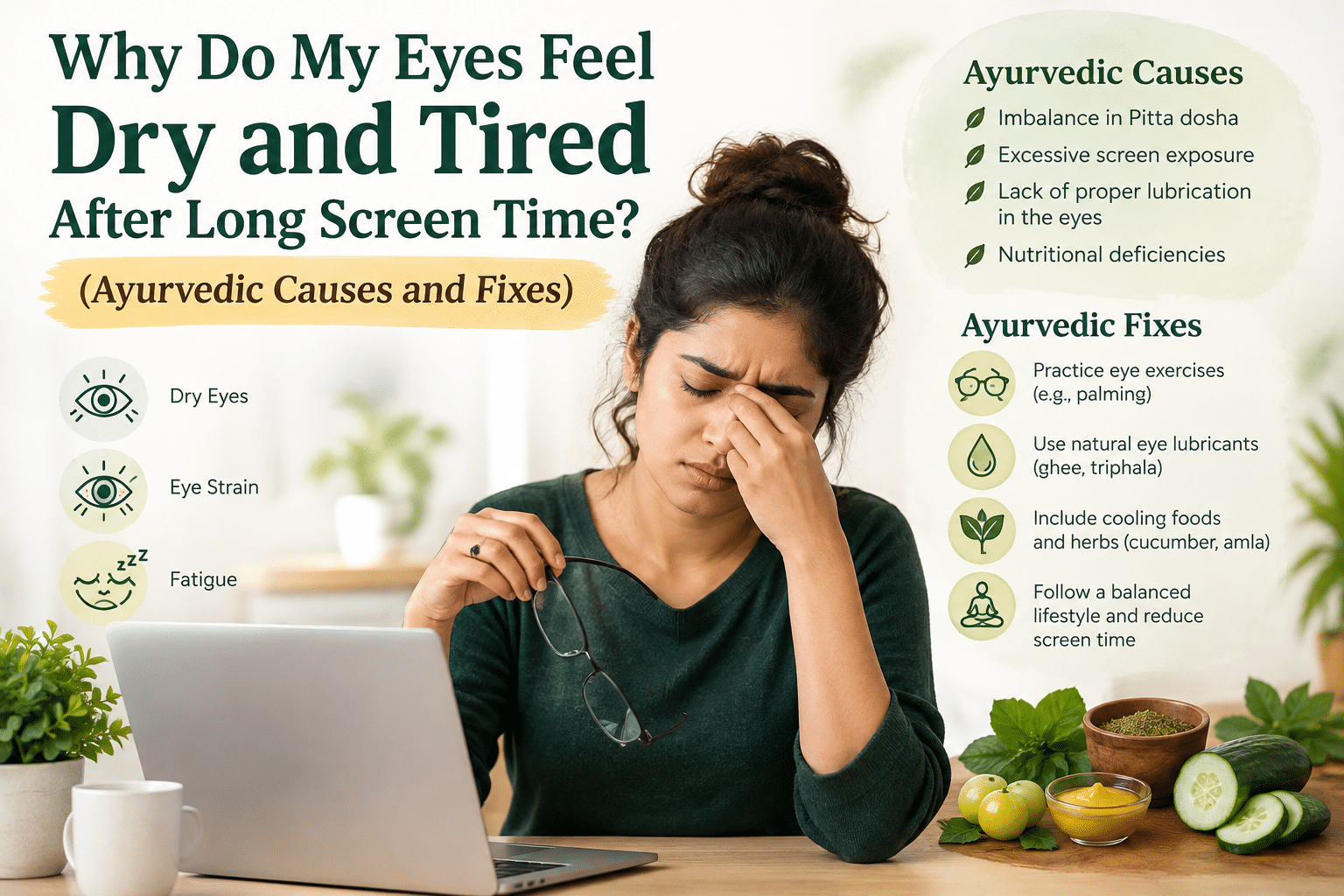
If your eyes feel dry, gritty, tired, or uncomfortable by the end of a long workday, you’re not alone.
Spending several hours looking at laptops, smartphones, tablets, and televisions can contribute to digital eye strain, sometimes referred to as computer vision syndrome.
Symptoms can include dryness, burning, temporary blurred vision, headaches, and difficulty focusing.
Ayurveda takes a holistic approach to eye care and traditionally considers the eyes in relation to Pitta, Vata, lifestyle, sleep, digestion, and overall balance.
Here’s what may be causing your symptoms and some practical Ayurvedic-inspired approaches that can support healthier eye habits.
What Causes Dry and Tired Eyes After Screen Time?
When you concentrate on a screen, you may blink less frequently or incompletely.
Reduced blinking can affect the tear film that keeps the surface of the eye comfortable and may contribute to:
- Dryness
- Burning
- Irritation
- Grittiness
- Temporary blurred vision
- Eye fatigue
Other factors can make digital eye strain worse, including:
- Prolonged uninterrupted screen use
- Poor lighting
- Glare or reflections on the screen
- Incorrect screen positioning
- Working too close to the screen
- Air conditioning or fans blowing directly toward the eyes
- Insufficient sleep
The Ayurvedic Perspective
In Ayurveda, the eyes are traditionally associated with Alochaka Pitta, which is connected with visual perception.
From an Ayurvedic perspective, excessive visual activity, heat, stress, and an imbalanced lifestyle may be considered factors that disturb the natural balance associated with the eyes.
Vata is also traditionally associated with dryness and may be considered relevant when symptoms occur alongside irregular sleep, stress, excessive activity, or prolonged screen exposure.
These are Ayurvedic interpretations and should not replace a medical evaluation when symptoms are persistent or severe.
Common Symptoms of Digital Eye Strain
Digital eye strain can present differently from person to person.
Common symptoms include:
- Dryness or a gritty sensation
- Burning or irritation
- Temporary blurred vision
- Headaches around the eyes or forehead
- Difficulty maintaining focus
- Eye fatigue
- Increased sensitivity to light
- Watery eyes
If these symptoms continue despite improving your screen habits, it’s important to have your eyes professionally evaluated.
Ayurvedic-Inspired Ways to Support Dry and Tired Eyes1. Netra Tarpanam
Netra Tarpanam is a classical Ayurvedic eye-care procedure in which a suitably prepared medicated preparation is retained around the eyes within a dough boundary.
It is traditionally used as part of Ayurvedic eye-care protocols and may be considered for certain symptoms involving dryness or eye discomfort.
However, it should be performed only under the guidance of a qualified practitioner.
Netra Tarpanam should not be presented as a guaranteed cure for dry eye disease or as a replacement for ophthalmic treatment.
2. Avoid Unverified Eye Washes
Traditional Ayurvedic preparations such as Triphala are widely used in Ayurvedic practice, but homemade preparations should not automatically be put directly into the eyes.
The eyes are highly sensitive, and contaminated or improperly prepared solutions can cause irritation or infection.
If you’re considering an Ayurvedic ophthalmic preparation, use a product specifically intended for ophthalmic use and follow guidance from a qualified professional.
3. Follow the 20-20-20 Rule
One of the simplest ways to reduce digital eye strain is the 20-20-20 rule:
Every 20 minutes, look at something approximately 20 feet away for at least 20 seconds.
Combine this with slow, complete blinking to help maintain the tear film on the surface of your eyes.
This simple habit can be particularly useful for people who spend most of their workday in front of a computer.
4. Maintain Healthy Screen Habits
Small changes to your workstation can make a significant difference.
Try to:
- Keep your screen at a comfortable viewing distance
- Position the screen slightly below eye level
- Reduce glare and reflections
- Adjust screen brightness to match your surroundings
- Take regular breaks
- Avoid working continuously for several hours without looking away
- Keep fans and air-conditioning vents from blowing directly into your eyes
5. Focus on Eye-Friendly Nutrition
A balanced diet can provide nutrients that support normal eye function.
Include foods such as:
- Leafy greens like spinach and fenugreek
- Carrots for beta-carotene
- Amla for vitamin C and antioxidants
- Almonds and nuts for vitamin E and healthy fats
- Colorful fruits and vegetables
- Adequate fluids throughout the day
From an Ayurvedic perspective, some people may also choose foods traditionally considered supportive of Pitta balance.
Avoid relying on a single food or supplement as a treatment for an eye condition.
6. Prioritize Adequate Sleep
Late-night screen use and insufficient sleep can contribute to tired and uncomfortable eyes.
Try to maintain a consistent sleep schedule and reduce unnecessary screen exposure before bedtime.
A simple evening routine can include:
- Reducing screen brightness
- Avoiding unnecessary scrolling before bed
- Keeping the bedroom comfortably dark
- Maintaining a consistent sleep and wake time
Adequate sleep supports overall wellbeing and can help reduce feelings of eye fatigue.
7. Cooling and Relaxation Practices
Ayurvedic routines may include practices intended to promote relaxation and balance.
A gentle foot massage (Padabhyanga) is traditionally used in Ayurveda as part of a relaxing bedtime routine.
However, it should be viewed as a complementary wellness practice rather than a clinically proven treatment for dry eye disease.
When Should You See an Eye Specialist?
Mild digital eye strain often improves when screen habits, blinking, sleep, and the working environment are addressed.
However, don’t rely only on home remedies if you experience:
- Persistent or worsening blurred vision
- Significant or persistent eye pain
- Severe redness
- Light sensitivity
- Sudden changes in vision
- Flashes of light
- A sudden increase in floaters
- Discharge from the eyes
- Symptoms that continue despite improving screen habits
These symptoms may require an ophthalmic examination.
An Ayurvedic practitioner can also help determine whether traditional Ayurvedic therapies are appropriate as a complementary part of your care.
Frequently Asked Questions
How long does it take for Ayurvedic treatment to relieve dry eyes?
The timeline depends on the underlying cause and severity of the symptoms.
Mild screen-related discomfort may improve after correcting screen habits, taking regular breaks, improving sleep, and addressing environmental factors.
For persistent symptoms, the appropriate treatment and duration should be determined after an individual assessment rather than assuming a fixed number of sessions.
Is Triphala eye wash safe for daily use?
Homemade Triphala water should not be routinely used as an eye wash without professional guidance.
Anything placed directly into the eyes must be appropriately prepared, sterile, and suitable for ophthalmic use.
If you want to explore Triphala-based eye care, discuss it with a qualified Ayurvedic practitioner and an eye-care professional where appropriate.
Can Ayurveda completely cure digital eye strain?
Digital eye strain is often influenced by screen habits, reduced blinking, prolonged near-work, lighting, dry environments, and other factors.
Ayurvedic approaches may be used as complementary wellness practices, but there is no guarantee that they will completely eliminate symptoms.
Improving screen hygiene and addressing the underlying cause remain important.
Can I use rose water directly in my eyes?
Avoid putting ordinary cosmetic or homemade rose water directly into your eyes.
Only use an ophthalmic product that is specifically formulated and labeled for use in the eyes, and follow professional guidance when necessary.
Can Netra Tarpanam replace artificial tears?
Not necessarily.
Artificial tears and Netra Tarpanam are different approaches, and the appropriate treatment depends on the underlying cause of your symptoms.
People with persistent dry eye symptoms should receive an appropriate evaluation rather than replacing prescribed or recommended treatment without professional advice.
Final Thoughts
Dry, tired eyes after long hours of screen use are increasingly common in today’s digital lifestyle.
Ayurveda approaches eye wellness through a combination of lifestyle, nutrition, rest, traditional therapies, and individualized care.
Practices such as regular screen breaks, conscious blinking, adequate sleep, a nutrient-rich diet, and appropriate professional Ayurvedic therapies may support overall eye comfort.
At the same time, persistent or severe eye symptoms should not be attributed solely to a Pitta or Vata imbalance without proper evaluation.
If you’re experiencing ongoing dryness, fatigue, or discomfort from prolonged screen use, consider consulting a qualified eye-care professional and an experienced Ayurvedic practitioner.
At Om Ayurveda Eye Care Centre, Gurugram, we can assess your individual concerns and recommend an appropriate Ayurvedic eye-care approach based on your symptoms, lifestyle, and overall needs.