


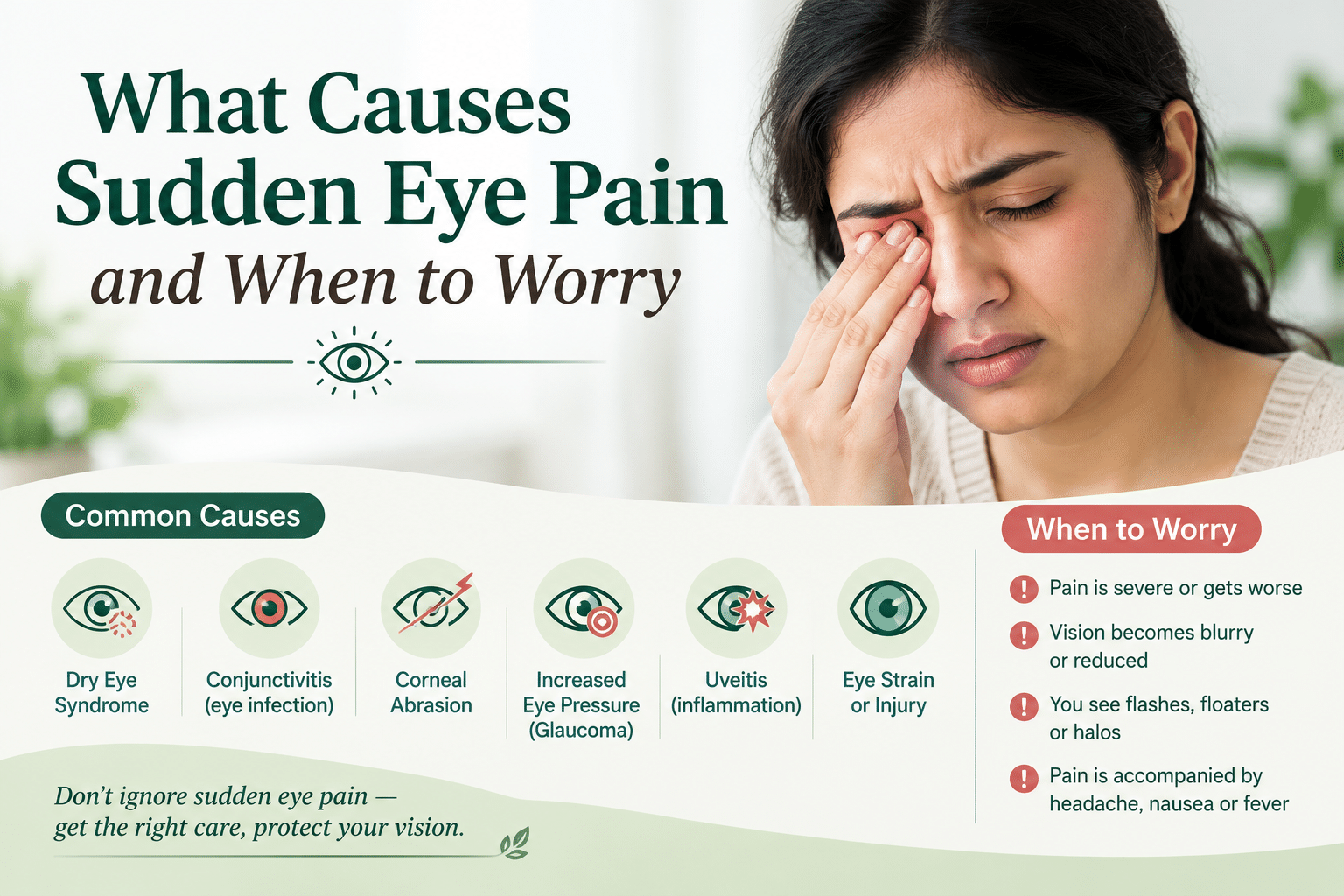
Sudden eye pain can be unsettling, especially when it comes out of nowhere. While many causes are minor and resolve quickly, some require urgent medical attention. Knowing the difference can help you respond appropriately rather than either panicking unnecessarily or ignoring something serious.
Common, Usually Harmless Causes of Eye Pain
1. Eye Strain
Prolonged screen use, reading, or driving can cause a dull, aching pain around and behind the eyes, typically resolving with rest.
2. Dry Eyes
Insufficient lubrication can cause a sharp, gritty, or burning pain, especially noticeable when blinking or during windy or air-conditioned environments.
3. Foreign Body Sensation
A small particle of dust, an eyelash, or debris caught under the eyelid can cause sudden, sharp pain and a strong urge to rub the eye.
4. Styes
A stye, a small, painful bump on the eyelid caused by a blocked oil gland, typically causes localized pain, redness, and swelling that develops relatively suddenly.
5. Minor Corneal Abrasion
A small scratch on the cornea’s surface, often from rubbing the eye or minor trauma, can cause sudden, sharp pain, tearing, and light sensitivity.
Causes That Need Prompt Medical Attention
1. Acute Angle-Closure Glaucoma
This is a medical emergency involving a sudden spike in eye pressure, causing severe eye pain, headache, blurred vision, nausea, and vomiting. It requires immediate treatment to prevent permanent vision loss.
2. Corneal Ulcer or Infection
Often related to contact lens misuse, this causes significant pain, redness, discharge, and light sensitivity, and requires prompt treatment to prevent scarring or vision loss.
3. Uveitis (Eye Inflammation)
Inflammation of the middle layer of the eye can cause deep, aching pain, redness, light sensitivity, and blurred vision, requiring medical evaluation and treatment.
4. Eye Injury or Trauma
Any sudden pain following a direct injury to the eye, whether from an object, chemical exposure, or impact, needs immediate medical assessment, even if the pain seems to subside temporarily.
5. Optic Neuritis
Inflammation of the optic nerve can cause pain, particularly with eye movement, along with vision changes, and requires prompt neurological and ophthalmological evaluation.
The Ayurvedic Perspective on Eye Pain
Ayurveda generally attributes sudden, sharp eye pain to aggravated Vata dosha (associated with sharp, shooting sensations) or Pitta dosha (associated with burning, inflammatory pain). However, Ayurveda has always recognized certain eye conditions as requiring urgent intervention beyond home remedies, classical texts describe specific emergency presentations that call for immediate specialized treatment rather than routine care.
Safe Home Care for Mild Eye Pain
For pain that’s clearly linked to strain, mild dryness, or minor irritation:
- Rest your eyes and avoid screens for a period
- Cold compress for pain linked to strain or minor swelling
- Triphala eye wash (properly strained) for mild irritation-related discomfort
- Blink consciously and stay hydrated to address dryness-related pain
- Avoid touching or rubbing the affected eye
Warning Signs That Mean You Should Seek Immediate Care
Do not wait or try home remedies if you experience:
- Sudden, severe eye pain, especially with headache, nausea, or vomiting
- Significant vision loss or noticeable blurring alongside the pain
- Pain following any injury, chemical exposure, or foreign object impact
- Pain with visible pus, significant swelling, or spreading redness
- Light sensitivity so severe you cannot keep your eyes open comfortably
- Pain in only one eye that’s rapidly worsening
These symptoms could indicate a serious, potentially sight-threatening condition requiring emergency evaluation, not a situation for home remedies or waiting it out.
When to See a Specialist (Non-Emergency but Still Important)
If eye pain persists for more than a day or two despite rest and home care, or recurs frequently without an obvious trigger like screen strain, it’s worth getting evaluated rather than continuing to self-treat indefinitely.
Frequently Asked Questions
Q: Can stress cause eye pain? A: Indirectly, yes. Stress often leads to muscle tension around the eyes, poor sleep, and increased screen use for distraction, all of which can contribute to eye strain and associated pain.
Q: Is it normal for eyes to hurt after crying? A: Yes, mild soreness after crying is common due to swelling and increased blood flow to the area, and typically resolves within a few hours without treatment.
Q: How do I know if eye pain is an emergency or something I can treat at home? A: If the pain is severe, sudden, accompanied by vision changes, nausea, or follows an injury, treat it as an emergency. Mild, gradual discomfort linked to screen use or dryness is generally safe to manage at home initially.
Final Thoughts
Most sudden eye pain is linked to strain, dryness, or minor irritation and responds well to simple home care. However, certain warning signs, severe pain, vision changes, injury, or accompanying symptoms like nausea, indicate a potential emergency that needs immediate medical attention rather than home remedies.
When in doubt, especially with sudden or severe symptoms, it’s always safer to get an eye specialist’s evaluation promptly rather than waiting to see if it resolves on its own.