

Age-Related Macular Degeneration (AMD) is one of the leading causes of vision loss in people over 60, affecting the macula, the part of the retina responsible for sharp, central vision. While genetics play a role, a significant portion of your risk is influenced by lifestyle factors you can actually control, and Ayurveda’s approach to diet and daily habits aligns well with much of the modern preventive advice.
What Is Age-Related Macular Degeneration?
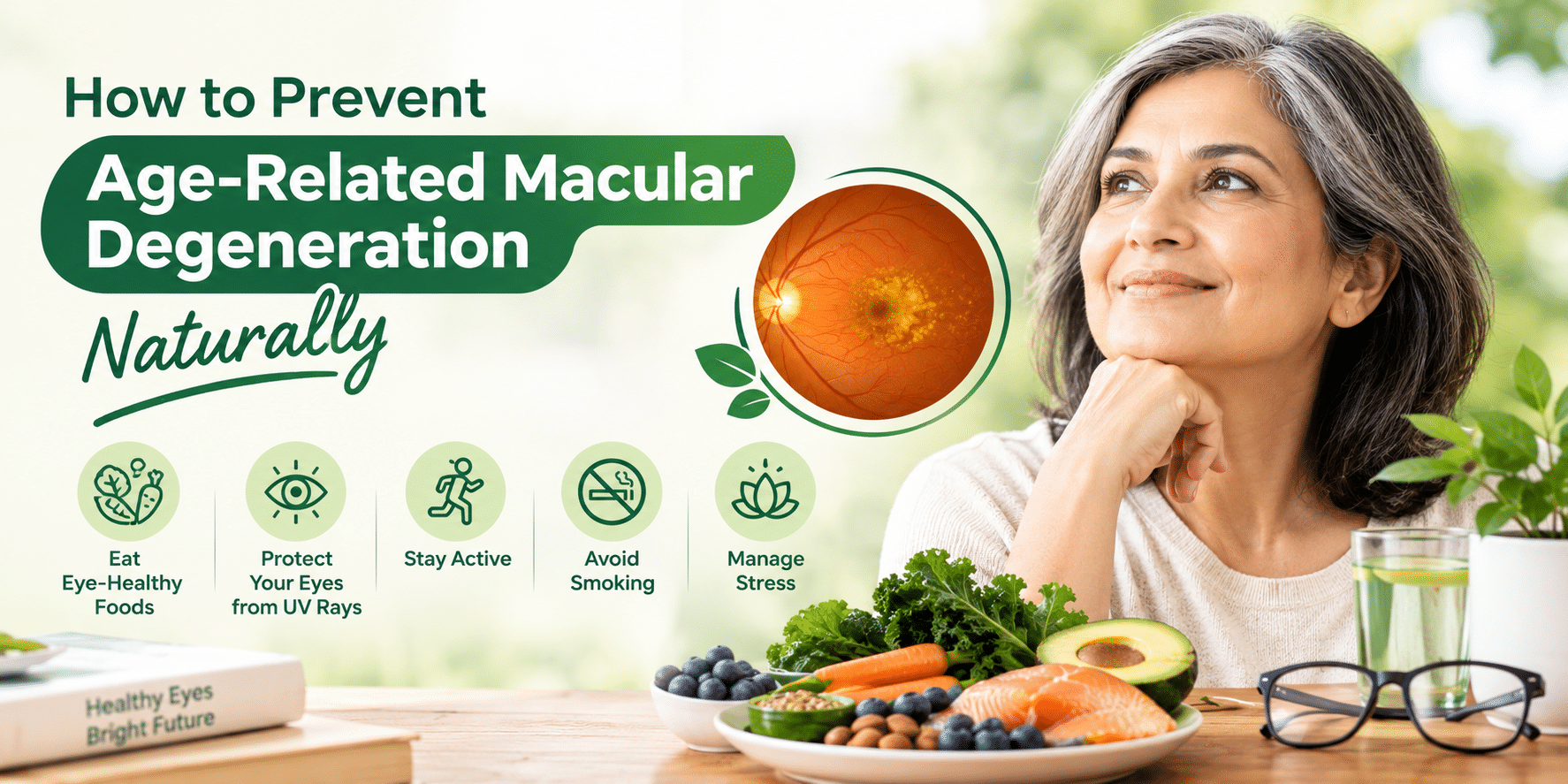
AMD develops when the macula deteriorates over time, causing blurred or distorted central vision while peripheral vision typically remains intact. It comes in two main forms: dry AMD (more common, gradual progression) and wet AMD (less common, but more rapidly damaging due to abnormal blood vessel growth).
Key Risk Factors for AMD
- Age (risk increases significantly after 60)
- Family history and genetics
- Smoking, one of the most significant modifiable risk factors
- Prolonged UV exposure without protection
- Poor diet, particularly low in antioxidants
- Obesity and cardiovascular risk factors
- High blood pressure
Prevention Strategies Backed by Both Modern Research and Ayurveda
1. Quit Smoking
This is, without question, the single most impactful lifestyle change for reducing AMD risk. Smokers have a significantly higher risk of developing AMD compared to non-smokers, and Ayurveda has long emphasized avoiding habits that introduce toxins (Ama) into the body as fundamental to disease prevention.
2. Eat an Antioxidant-Rich Diet
Both modern nutritional science and Ayurveda emphasize antioxidants for retinal health:
- Amla (Indian gooseberry), exceptionally rich in Vitamin C
- Leafy greens like spinach, rich in lutein and zeaxanthin, which concentrate directly in the macula
- Colorful vegetables and fruits for a broad range of protective antioxidants
- Nuts, particularly almonds, for Vitamin E
3. Protect Your Eyes from UV Exposure
Wearing UV-protective sunglasses outdoors is a simple, effective preventive step that both modern ophthalmology and Ayurvedic principles around protecting the eyes (Netra Raksha) support.
4. Manage Blood Pressure and Cardiovascular Health
Since AMD is linked to vascular health, managing blood pressure and cholesterol through diet, exercise, and stress reduction, core Ayurvedic principles of balanced living, supports better long-term retinal health.
5. Maintain a Healthy Weight
Obesity is associated with increased AMD progression risk. Ayurveda’s emphasis on balanced Agni (digestive fire) and appropriate diet for your constitution naturally supports healthier weight management over time.
6. Regular Antioxidant Support Through Ghee and Triphala
Triphala, rich in antioxidant compounds, and ghee, valued in Ayurveda for nourishing eye tissue, are traditionally recommended as part of a long-term eye health routine, particularly for people in the age group at higher AMD risk.
7. Reduce Prolonged Screen Exposure
While not a direct cause of AMD, minimizing excessive eye strain and incorporating regular breaks supports overall eye health and reduces cumulative stress on visual structures over decades of use.
Supportive Ayurvedic Care for Early AMD
For people already showing early signs of AMD (typically identified through a dilated eye exam by an ophthalmologist), Ayurvedic supportive care may include:
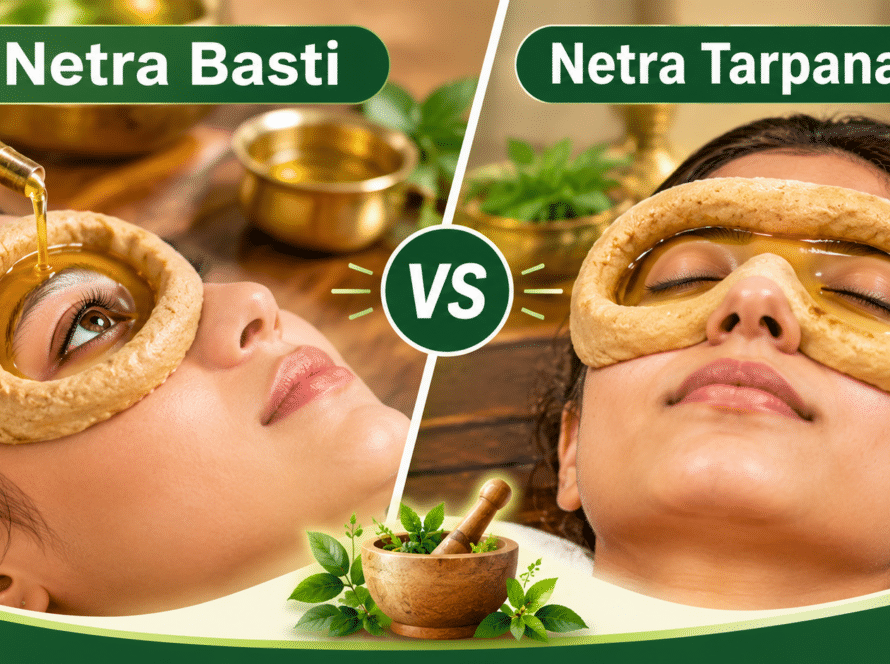
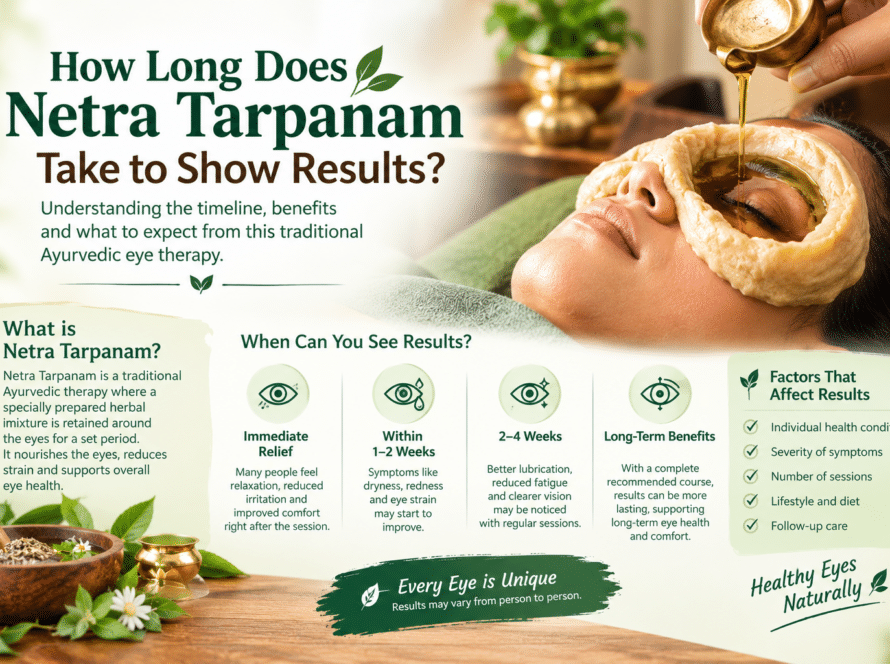
- Periodic Netra Tarpanam for general eye tissue nourishment
- An intensified antioxidant-rich diet
- Stress reduction practices, since chronic stress affects overall vascular and cellular health
- Close coordination with your ophthalmologist for regular monitoring, which remains essential regardless of supportive care being pursued
What Ayurveda Cannot Do
It’s important to be clear: Ayurveda cannot reverse macular degeneration once significant retinal damage has occurred, particularly in wet AMD, which requires prompt medical treatment (such as anti-VEGF injections) to prevent rapid vision loss. Supportive Ayurvedic care works best as prevention and as a complement to, not a replacement for, regular ophthalmological monitoring and treatment.
When to See a Specialist
Schedule an eye exam promptly if you notice:
- Straight lines appearing wavy or distorted
- A blurry or blank spot in your central vision
- Difficulty recognizing faces or reading despite adequate lighting
- Colors appearing less vibrant than before
Early detection, especially for wet AMD, significantly improves treatment outcomes.
Frequently Asked Questions
Q: Can diet alone prevent macular degeneration?
A: Diet plays a significant preventive role, especially antioxidant-rich foods, but genetics, smoking status, and overall cardiovascular health all contribute to your overall risk.
Q: Is Netra Tarpanam useful for someone already diagnosed with AMD?
A: It may offer supportive benefit for general eye comfort and nourishment, but it should be used alongside, never instead of, prescribed medical treatment and monitoring for AMD.
Q: At what age should I start getting screened for AMD?
A: Regular eye exams, including a dilated retinal exam, are generally recommended starting around age 40, with more frequent screening after 60 or if you have risk factors like family history or smoking.
Final Thoughts
While you can’t change your genetics, quitting smoking, eating an antioxidant-rich diet, protecting your eyes from UV exposure, and maintaining good cardiovascular health are all genuinely effective, evidence-supported ways to reduce your AMD risk, and they align closely with core Ayurvedic principles of balanced living.
If you’re concerned about your AMD risk, combining regular ophthalmological screening with Ayurvedic dietary and lifestyle guidance offers a well-rounded, proactive approach to protecting your long-term vision.