

Cystoid Macular Edema Treatment
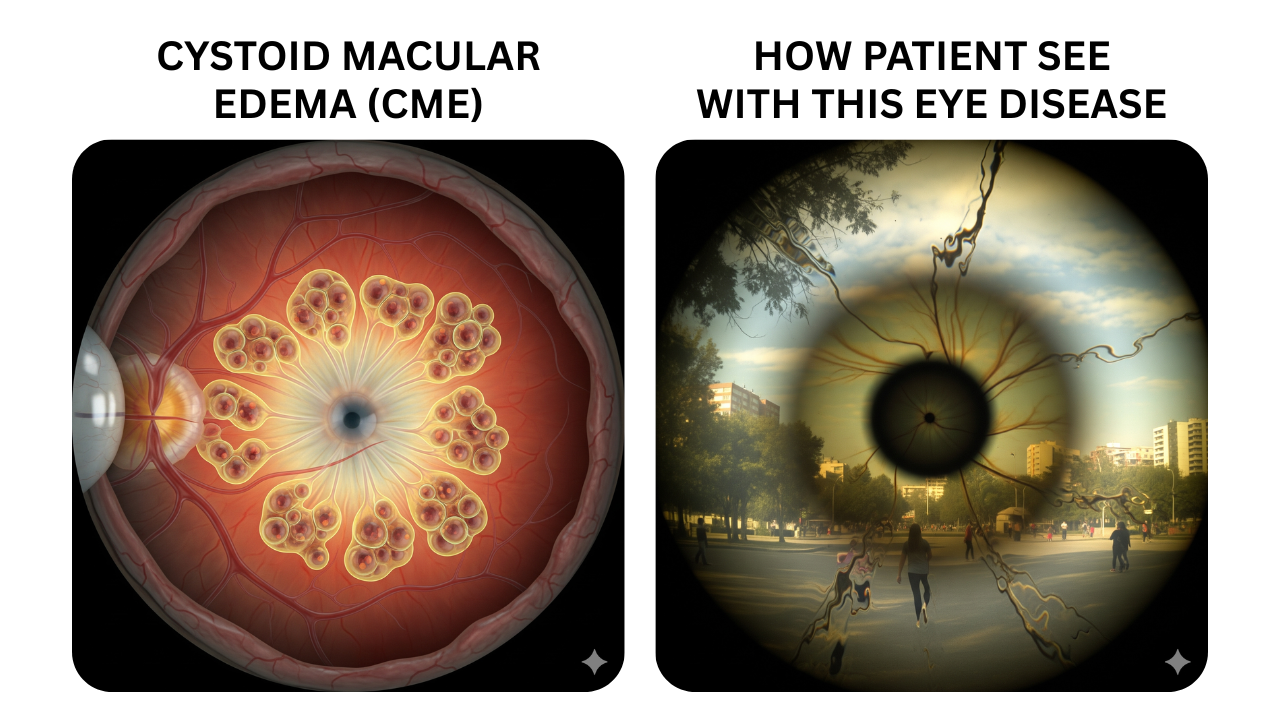
Cystoid Macular Edema (CME) is a serious eye condition that occurs when fluid accumulates in the macula, the central part of the retina responsible for sharp and detailed vision. This condition leads to swelling in the retina and can cause blurred or distorted vision. Early Cystoid Macular Edema treatment is essential to prevent long-term vision problems and maintain healthy eyesight.
What is Cystoid Macular Edema?
Cystoid Macular Edema occurs when tiny cyst-like pockets of fluid develop in the macula due to leakage from blood vessels in the retina. The macula plays an important role in central vision, allowing you to read, recognize faces, and see fine details. When swelling occurs in this area, it can significantly affect visual clarity and daily activities.
Cystoid Macular Edema Symptoms
Common Cystoid Macular Edema symptoms include blurred vision, distorted central vision, and difficulty seeing fine details. Some patients may notice that objects appear wavy or darker than usual. Colors may also appear faded or different from normal. These symptoms often develop gradually, so regular eye examinations are important for early detection.
Cystoid Macular Edema Causes
There are several Cystoid Macular Edema causes. One of the most common causes is inflammation after cataract surgery. Other conditions such as diabetes, retinal vein blockage, eye inflammation, or injury can also lead to macular swelling. Certain medications and retinal diseases may increase the risk of developing CME.
Cystoid Macular Edema Diagnosis
Early Cystoid Macular Edema diagnosis is important for proper treatment. Eye specialists usually perform a detailed retinal examination and advanced imaging tests such as Optical Coherence Tomography (OCT). These tests help doctors detect swelling in the retina and determine the severity of the condition.
Cystoid Macular Edema Treatment Options
The treatment for Cystoid Macular Edema depends on the underlying cause. In Inflammatory conditions Ayurvedic Vidalakam (herbal part) over eyelids, Miracle Swedanam (Gentle formentation over eyelids) and anti inflammatory herbs are used to reduce inflammation.
In later conditions Shophahara Chikitsa is done alongwith Takradhara / Shirodhara is done to improve Retinal vascularized. When odema is subsided some Shodhara ( Purificating Procedure) and Nasyam is done with lifestyle modifications to stop recurring. Early Macular Edema treatment improves the chances of recovery and helps restore clear vision.
Expert Care at Omayurveda Eye Care
For patients experiencing symptoms such as blurred vision or retinal swelling, timely diagnosis and treatment are essential. At Omayurveda Eye Care, experienced eye specialists provide advanced diagnosis and personalized Cystoid Macular Edema treatment to help protect vision and maintain long-term eye health.
Frequently Asked Questions (FAQs)
Ans. Cystoid Macular Edema (CME) is an eye condition in which fluid collects in the macula, causing swelling in the retina. This swelling can lead to blurred or distorted central vision.
Common Cystoid Macular Edema symptoms include blurred vision, distorted central vision, difficulty reading, and faded or dull colors. Some people may also notice that straight lines appear wavy.
Ans. There are several Cystoid Macular Edema causes, including inflammation after cataract surgery, diabetes, retinal vein blockage, eye injuries, or other retinal diseases.
Ans. Doctors diagnose Cystoid Macular Edema through a detailed eye examination and imaging tests such as Optical Coherence Tomography (OCT), which helps detect swelling in the retina.
Ans. If left untreated, Cystoid Macular Edema can damage the macula and affect central vision. Early diagnosis and treatment help prevent serious complications.
Ans. Yes, in some cases CME can occur after cataract surgery due to inflammation in the eye. However, early treatment usually helps manage the condition effectively.