

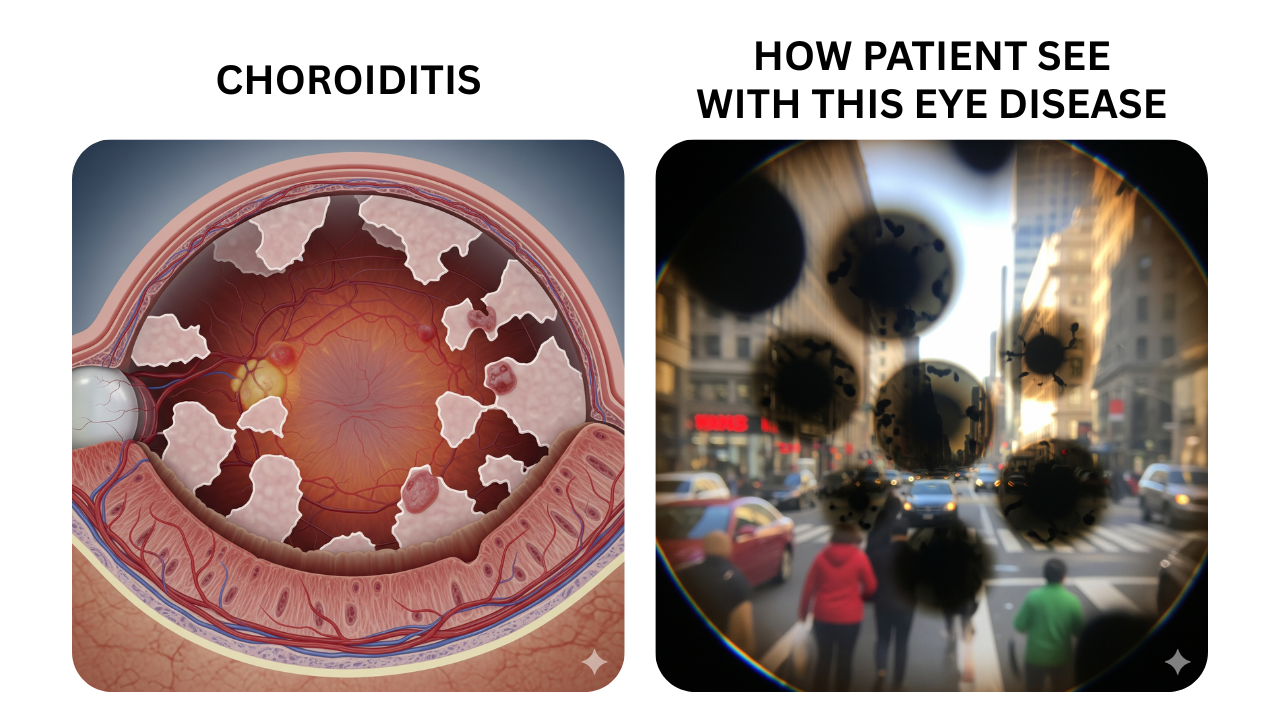
Choroiditis Eye Treatment
Choroiditis is an eye condition that occurs when the choroid layer of the eye becomes inflamed. The choroid is a layer of blood vessels located between the retina and the sclera that supplies oxygen and nutrients to the retina. When inflammation develops in this layer, it can affect the retina and lead to vision problems. Early choroiditis treatment is important to prevent complications and protect long-term eye health.
What is Choroiditis Eye Disease?
Choroiditis eye disease is a form of posterior uveitis that affects the back part of the eye. The inflammation can spread to the retina and cause a condition known as chorioretinitis. Because the retina is responsible for visual signals, inflammation in this area can interfere with normal vision. If not treated early, this condition may lead to permanent vision damage.
Choroiditis Symptoms
Recognizing choroiditis symptoms early can help prevent serious vision complications. Common symptoms include blurred vision, floaters, sensitivity to light, eye pain, and red eyes. Some people may also notice dark spots or flashes of light in their field of vision. These symptoms occur because inflammation affects the retina and disrupts the normal functioning of the eye.
Choroiditis Causes
There are several choroiditis causes that may lead to inflammation of the choroid. In many cases, infections such as bacterial, viral, fungal, or parasitic infections can trigger the condition. Autoimmune diseases, eye injuries, and certain systemic health conditions may also cause inflammation in the choroid and retina. Identifying the underlying cause is important for selecting the most effective treatment plan.
Choroiditis Diagnosis
Proper choroiditis diagnosis usually involves a comprehensive eye examination. Eye specialists may perform retinal imaging tests such as Optical Coherence Tomography (OCT) or angiography to examine the back of the eye and detect inflammation. Laboratory tests may also be recommended to identify infections or systemic conditions associated with the disease.
Choroiditis Treatment Options
The goal of choroiditis treatment is to reduce inflammation and protect the retina. In Acute conditions, classical shophhara Chikitsa with langhanam, Mridu Kizhiswedam, herbal Asehatanam, Akshi-sekam, vidalkam or Pindi is used with ayurvedic anti-inflammatory medications. After reduction of inflammation, other ayurvedic medications and Kriyakalap’s are used to stop recurrences. Early treatment helps control the condition and prevent permanent vision loss.
For patients experiencing symptoms such as blurred vision, floaters, or eye pain, timely consultation with an eye specialist is essential. At Omayurveda Eye Care, experienced specialists provide diagnosis and personalized treatment for choroiditis and other retinal conditions.
FAQs
Ans. Choroiditis is an inflammatory eye condition that affects the choroid layer located between the retina and the sclera. It can interfere with vision if inflammation spreads to the retina.
Ans. Common choroiditis symptoms include blurred vision, floaters, eye pain, sensitivity to light, and dark spots in the visual field.
Ans. Choroiditis can be caused by infections, autoimmune diseases, eye injuries, or systemic health conditions that trigger inflammation in the eye.
Ans. Yes, untreated choroiditis may damage the retina and lead to permanent vision problems or vision loss.
Ans. Choroiditis treatment usually involves anti-inflammatory medications, corticosteroids, and medicines to treat infections or underlying diseases.
Ans. Patients experiencing symptoms such as blurred vision or floaters can consult specialists at Omayurveda Eye Care for diagnosis and treatment.